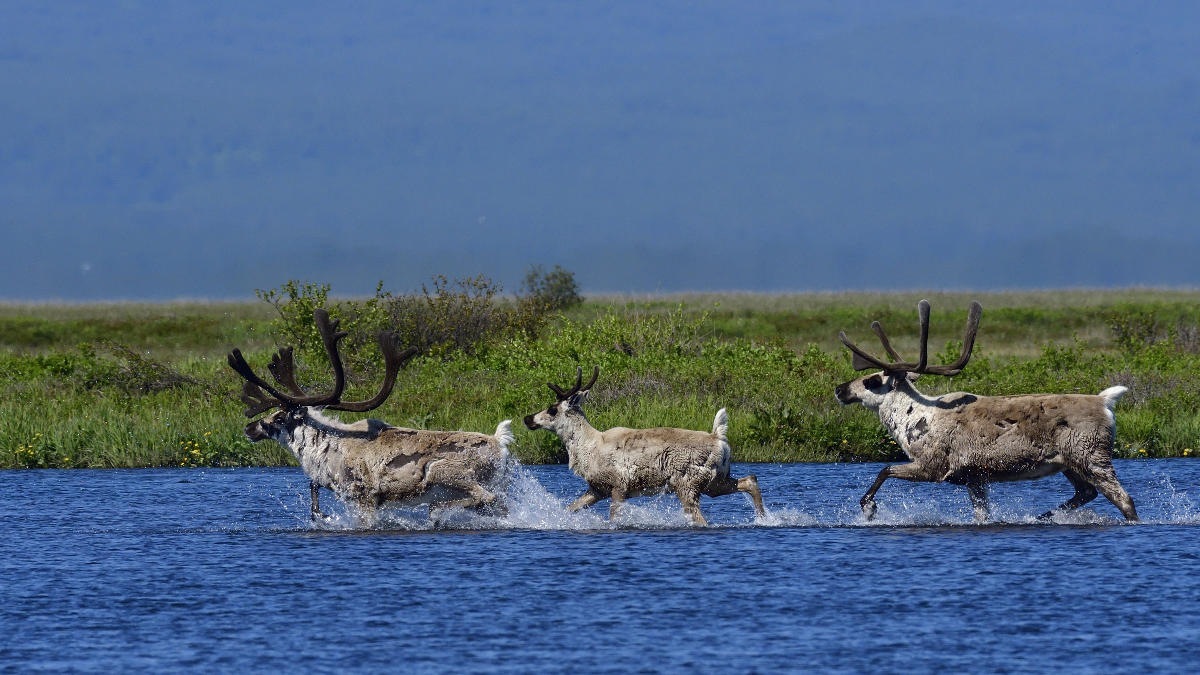
Wild reindeer in Kamchatka’s Kronotsky Nature Reserve have begun their active foraging period. The animals, numbering no more than 800 individuals, are rapidly accumulating fat reserves ahead of their autumn migration and a prolonged mountain winter. The foundation of their diet during this time consists of cereal seeds, legumes, and berries.
For the only remaining large herd on the peninsula, this life cycle stage largely determines the survival of the population. These protected ungulates face a lengthy transition to winter pastures, as well as the mating season and male rutting contests. The specific forage base in the Kronotsky-Bogachevka tundra helps the reindeer achieve the necessary physical condition. Plant fats are currently required by the entire herd – from adults to the young.
The late-summer feeding behavior of the animals reveals a targeted search for mushroom habitats. The ungulates linger for extended periods in areas rich in fungi, including fly agarics, which are toxic to humans. This specific diet enables the wild animals to rapidly overcome protein and trace element deficiencies.
The fattening process is complicated by high levels of biting insect activity. Strong tundra winds periodically suppress the mosquito population, but black flies, horseflies, biting midges, and botflies continue to attack the herd. Seeking refuge from blood-sucking insects, the reindeer are forced to retreat to the shores of the Kronotsky Estuary or ascend to cold snowfields on the slopes of the surrounding hills.
Monitoring of the Kamchatka population is conducted remotely. Reserve personnel observe the herd from a safe distance, ensuring no interference with natural processes. Since 2024, conservation efforts in Kamchatka have been supported by the Foundation for the Preservation of Ecological Systems of the Far East and Siberia. Grant funding has provided the reserve’s outposts with equipment for uninterrupted satellite communication, and patrol groups – with new specialized machinery and gear.