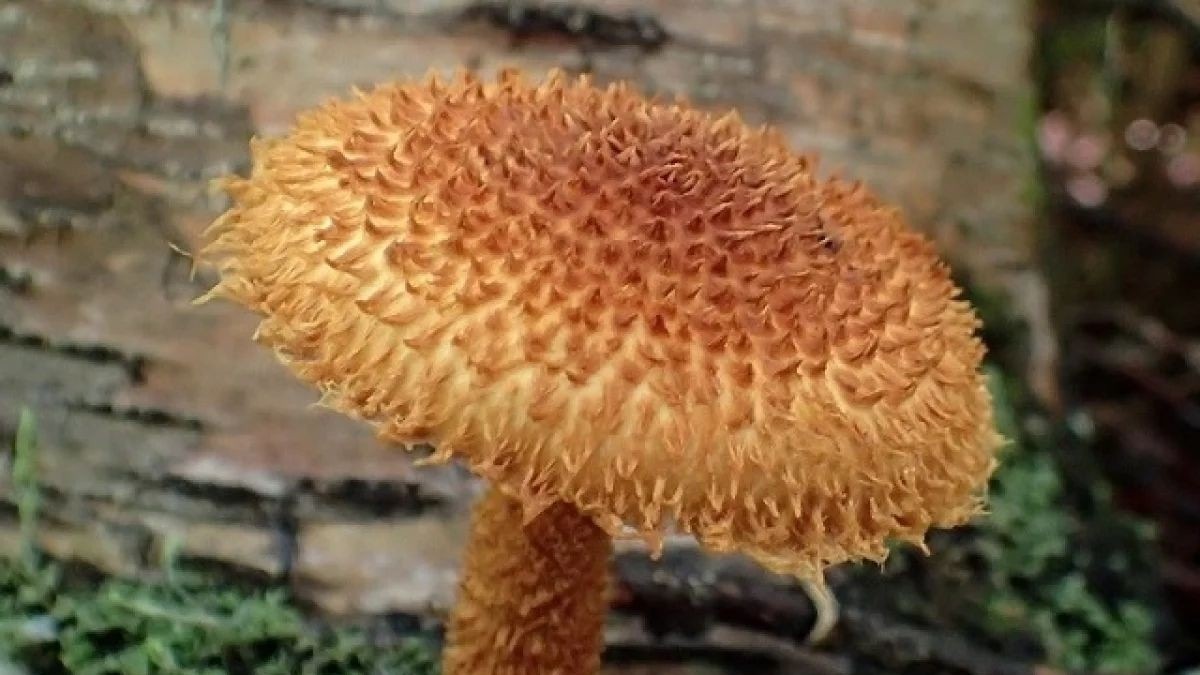
Biologists discovered two rare mushroom species, including one previously unrecorded on the peninsula, near the town of Yelizovo outside Petropavlovsk-Kamchatsky. The discovery occurred in late August in a birch forest just a few kilometers from a busy dacha settlement where locals regularly forage for wild plants. The find was made by the Plant Ecology Laboratory of the Kamchatka Branch of the Pacific Geographical Institute, part of the Far Eastern Branch of the Russian Academy of Sciences.
The first species – Hypocreopsis lichenoides – has been documented in the Kamchatka Territory for the first time, although it is already listed in the Red Data Book of the neighboring Magadan Region. The second specimen – Leucopholiota lignicola – is protected at the federal level and included in the Red Data Book of Russia. Prior to this, the species had been found on the peninsula only twice, both times in entirely different environmental conditions within the remote spruce forests of Central Kamchatka. This mushroom is distinguished by its bright appearance and is edible, but harvesting it is strictly prohibited by law.
The natural environment of the region remains highly unevenly studied. Due to the inaccessibility of many areas and the high costs of scientific expeditions, significant gaps persist in the documentation of both terrestrial and marine ecosystems on the peninsula. Scientific teams travel to the remote corners of Kamchatka annually to collect biodiversity data, yet previously unknown species grow in immediate proximity to human infrastructure. The forests surrounding suburban areas are poorly understood, and their scientific exploration often fails to keep pace with land development.
Local residents can report unusual ecological findings through a dedicated form on the institute’s website. This citizen science initiative facilitates the collection of an updated database regarding the distribution of rare plants and fungi. Strict criminal liability applies to the harvesting of endangered species. In accordance with Article 260.1 of the Criminal Code of the Russian Federation, the intentional destruction or illegal foraging of these protected mushrooms is punishable by up to four years in prison and a fine of up to one million rubles.