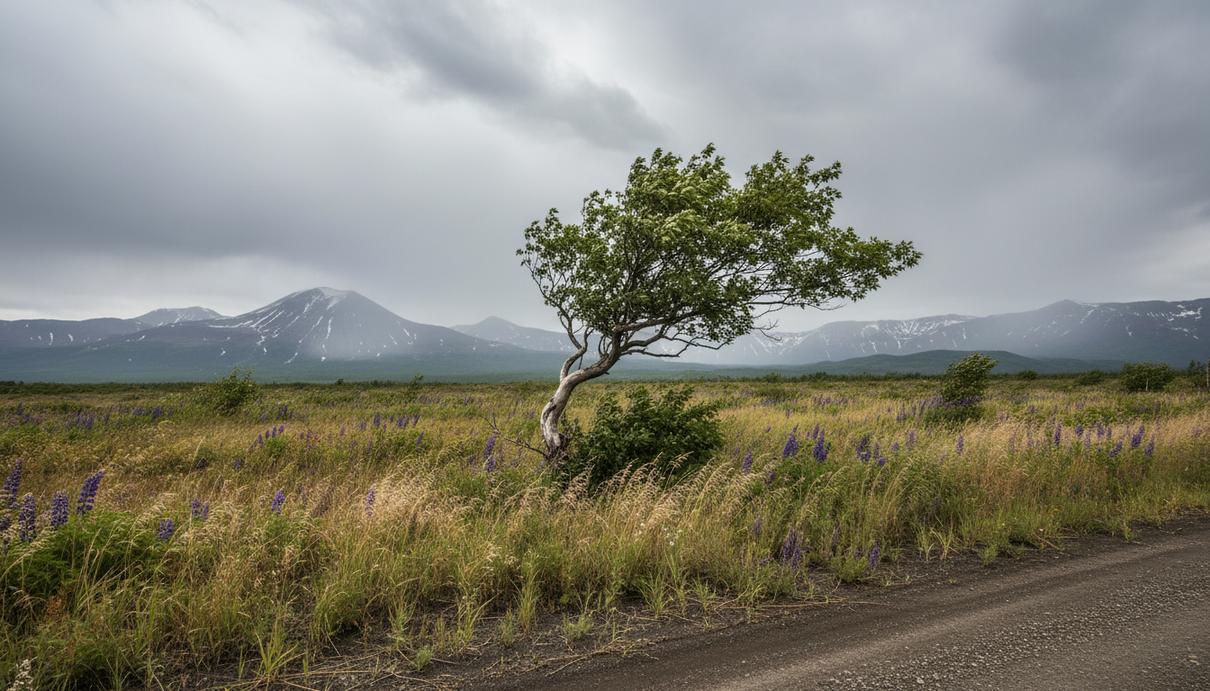
Authorities in Kamchatka are intensifying measures to control the spread of the box elder – a plant officially classified as an invasive species. Starting in 2026, landowners will be legally required to implement regular phytosanitary protocols to prevent the tree from establishing roots on their properties. This regulation primarily affects the agricultural sector and municipal landscaping projects, necessitating the continuous monitoring of disturbed terrains.
Unlike warmer regions of Russia where the box elder rapidly colonizes new areas, its proliferation on the Kamchatka Peninsula is currently constrained by severe climatic conditions. The brief summer season prevents young shoots from adequately hardening before winter sets in, while strong winds easily break the fragile branches. At present, only isolated specimens are recorded in Petropavlovsk-Kamchatsky, the Yelizovsky District, Milkovo, and Ust-Kamchatsk.
The tree establishes itself predominantly in human-altered landscapes – including roadsides, wastelands, abandoned orchards, and former construction sites. It has not yet penetrated natural forest massifs, river floodplains, or the tundra. However, the plant possesses a highly efficient reproductive system. The tree begins to bear fruit by its sixth or seventh year, after which its seeds are easily dispersed by the wind.
Upon reaching unoccupied ground, the box elder forms dense thickets that outcompete and displace native grasses and shrubs. This process leads to a reduction in local biodiversity and compromises the stability of the soil cover. In populated areas, the inherent fragility of the wood presents an additional hazard, creating significant risks of branch collapse during heavy snowfalls, freezing rain, and gale-force winds.
Despite existing natural climatic barriers, the potential threat to the peninsula persists. Global warming could prolong the vegetation period, while increasing anthropogenic impacts continue to generate newly disturbed areas suitable for seed germination. Because the natural communities of Kamchatka evolved under conditions of prolonged geographical isolation, the native flora exhibits low resistance to invasive species capable of disrupting the established ecological balance.