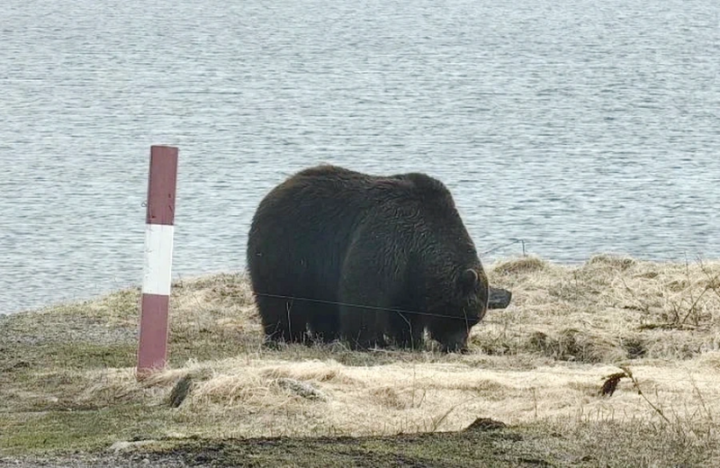
In a vivid display of nature’s enduring power, a seasoned brown bear recently asserted its dominance over human visitors at a remote outpost within Russia’s Kronotsky Nature Reserve on the Kamchatka Peninsula. The encounter, emblematic of the ongoing delicate balance between wildlife and conservation efforts in globally significant ecosystems, saw the majestic creature calmly traverse areas frequented by reserve inspectors, seemingly unfazed by their presence.
Staff at the ‘Ozerny’ cordon, situated near the famed Kuril Lake, first spotted the formidable animal on April 6th before its more recent, striking reappearance. Inspector Yevgeny Dengess noted the bear’s composed demeanor, indicating a deep familiarity with its territory. “Its behavior shows it’s a local, well-acquainted with its domain. It acted calmly, not even paying attention to us, showing no fear,” Dengess reported, painting a picture of an apex predator at ease in its undisputed realm.
Dengess elaborated that such mature, experienced bears typically avoid human habitations, unlike younger, more impulsive animals that occasionally cause disturbances. While acknowledging the potential for conflict, inspectors usually rely on non-lethal methods. “If such an event occurs, we will firmly address the bears. Hopefully, we won’t need to use flare guns, but generally, everything proceeds peacefully,” he added, highlighting the cautious and respectful approach adopted by conservationists in this critical habitat.
This encounter also provides a timely snapshot of the annual awakening of Kamchatka’s renowned brown bear population. The first solitary males typically emerge from hibernation by mid-March. However, the mass emergence, including females with two-to-three-year-old cubs, begins in mid-April as environmental conditions improve. Mothers with newborns are the last to leave their winter dens, usually in late May or June, once the snow fully recedes, signifying the full cycle of life returning to this UNESCO World Heritage site.
The Kamchatka Peninsula, often dubbed ‘the land of fire and ice,’ is a critical global biodiversity hotspot, home to one of the largest brown bear populations in the world. Such interactions underscore the vital role of protected areas like the Kronotsky Reserve in preserving these magnificent species and ensuring their continued existence for future generations, drawing international attention to the delicate balance of nature in Russia’s far east.