Kamchatka, a region renowned for its pristine natural landscapes and vital ecological role, is embarking on an ambitious journey to reinforce its arboreal heritage. Specialists on the peninsula have confirmed a highly successful harvest of coniferous tree seeds this season, a development poised to significantly bolster extensive reforestation efforts across the vast territory.
This abundant yield marks a crucial turning point for Kamchatka’s ecological resilience. Following a period of low productivity last year, the current seed reserves are now deemed more than sufficient to undertake comprehensive forest regeneration projects. These initiatives are designed to restore areas impacted by both past logging activities and natural tree mortality, contributing directly to biodiversity preservation and local environmental stewardship that resonates with global conservation goals.
Central to these restoration efforts is the Kuril larch, a cornerstone species that forms the backbone of Kamchatka’s unique forest ecosystems. Officials at the regional Ministry of Forestry and Hunting have reported an average fruiting season for this particular larch, ensuring a steady, albeit moderate, supply of this essential genetic material. Young trees cultivated from these indigenous seeds will meticulously form the foundation for new, artificially planted forests in depleted areas, ensuring the genetic integrity and future health of the local flora.
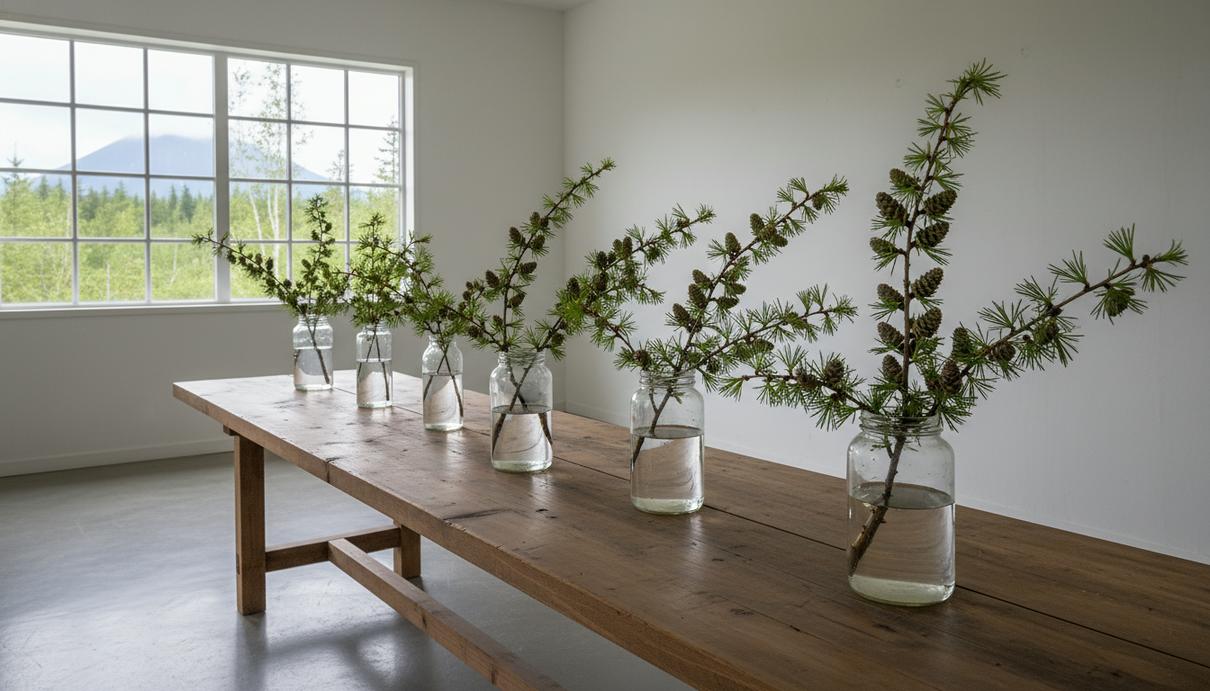
To ensure the efficacy of their conservation strategies, forecasting the potential cone yield relies on an ingenious and scientifically rigorous method known as ‘bud forcing.’ Forestry experts from the Atlasovsky forestry district meticulously gather branches from recently felled trees within active logging sites. These branches are then brought into heated facilities and placed in water, simulating spring conditions that encourage the artificial blossoming of latent seed pods. This controlled environment allows specialists to accurately gauge the forthcoming harvest. As explained by officials, ‘The baseline indicator involves counting the number of cones per linear meter of branch, after which the fruiting level is translated into a comprehensive point system,’ highlighting the precision underpinning their long-term planning.
Looking ahead, a substantial seed procurement drive is already slated for 2026, targeting an impressive collection of 200 kilograms of seeds across the peninsula. The majority of this volume, approximately 195 kilograms, will consist of deciduous tree seeds, with coniferous varieties accounting for the remaining five kilograms. Before any planting commences, the entire batch will undergo rigorous scrutiny at a dedicated forest seed station. Here, experts will meticulously assess germination rates and issue official state certificates, guaranteeing the viability and quality of the seeds destined to become Kamchatka’s future forests, thereby contributing to the region’s ecological health and global environmental stability.