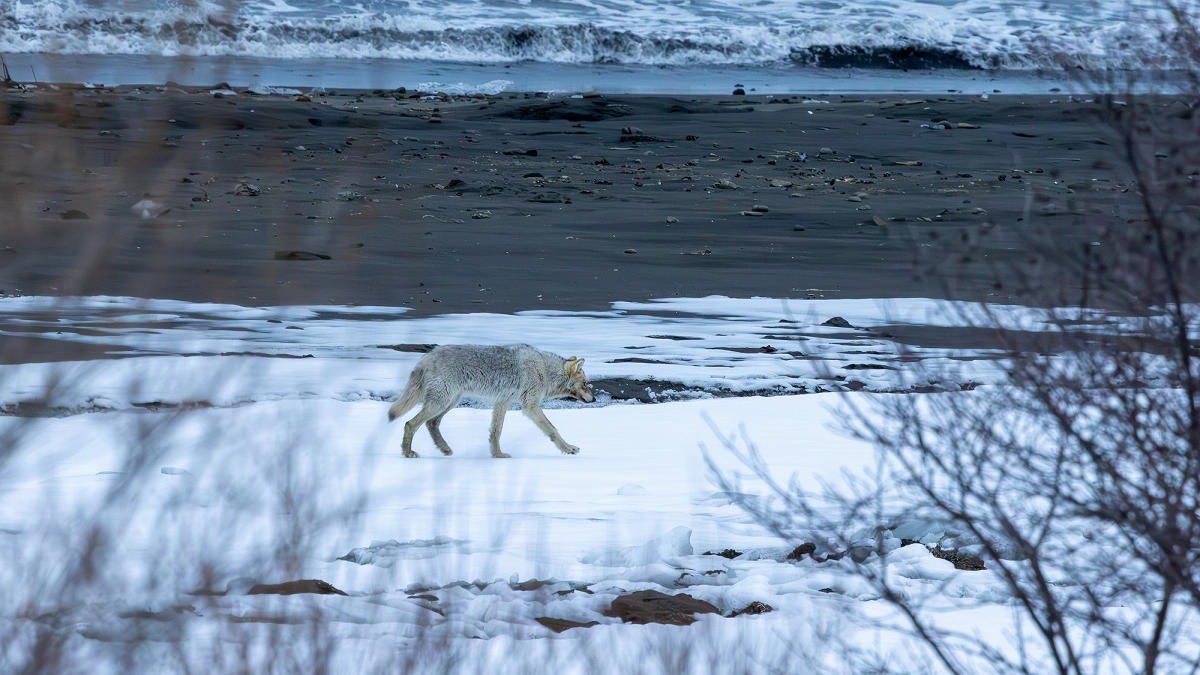
Kamchatka, Russia – In a rare and striking observation, wildlife experts at the Kronotsky Nature Reserve on Russia’s remote Kamchatka Peninsula have reported the visual confirmation of a pack of four wolves navigating the coastal terrain near the “Kronoki” cordon. The animals, believed to be foraging for sustenance along the shoreline, were compelled to dramatically alter their traditional routes due to rapidly changing ice conditions—a stark indicator of the region’s accelerating climatic shifts. This event underscores the mounting pressures on wildlife in one of the world’s most pristine and ecologically vital regions, a UNESCO World Heritage site globally recognized for its unique biodiversity.
The compelling encounter was documented by district state inspector Dmitry Balakirev and research fellow Evgenia Volkova, both seasoned observers of Kamchatka’s unique biodiversity. While wolf tracks are a regular sight on the coastal sands, direct visual contact with these elusive predators is exceptionally uncommon. The sighting comes weeks after a single, large male wolf was captured by a camera trap near a local boat station in early March, signaling an increased presence of the species in the area before the full pack emerged.
The saga of the pack unfolded over a morning when the inspector first glimpsed two animals from his window. A closer inspection with binoculars revealed three, soon to be joined by a fourth, forming a cohesive unit. The pack initially moved towards the mouth of the Olga River, a well-known hunting ground. However, their path was abruptly blocked. A series of unseasonably warm days coupled with rainfall had completely melted the customary ice crossing, rendering the river impassable. Demonstrating remarkable adaptability, the wolves assessed the altered landscape, chose not to attempt the perilous swim, and instead meticulously explored the bank before retreating towards the Tatyana River, effectively redrawing their immediate hunting grounds.
Further analysis by reserve scientist Vladimir Gordienko suggested that the pack likely consisted of a dominant female and her litter of year-old pups, noting a significant size disparity within the group. Professor Gordienko elaborated that these coastal wolves are often drawn to marine detritus washed ashore, providing a crucial, albeit unpredictable, food source. He emphasized that wolf packs are inherently stable family units, where younger generations frequently remain with their parents for extended periods, sometimes throughout their lives. This particular incident offers a poignant glimpse into how these highly intelligent and communal predators are responding to a rapidly warming environment, underscoring the urgent global implications of climate change on remote ecosystems and their apex inhabitants.