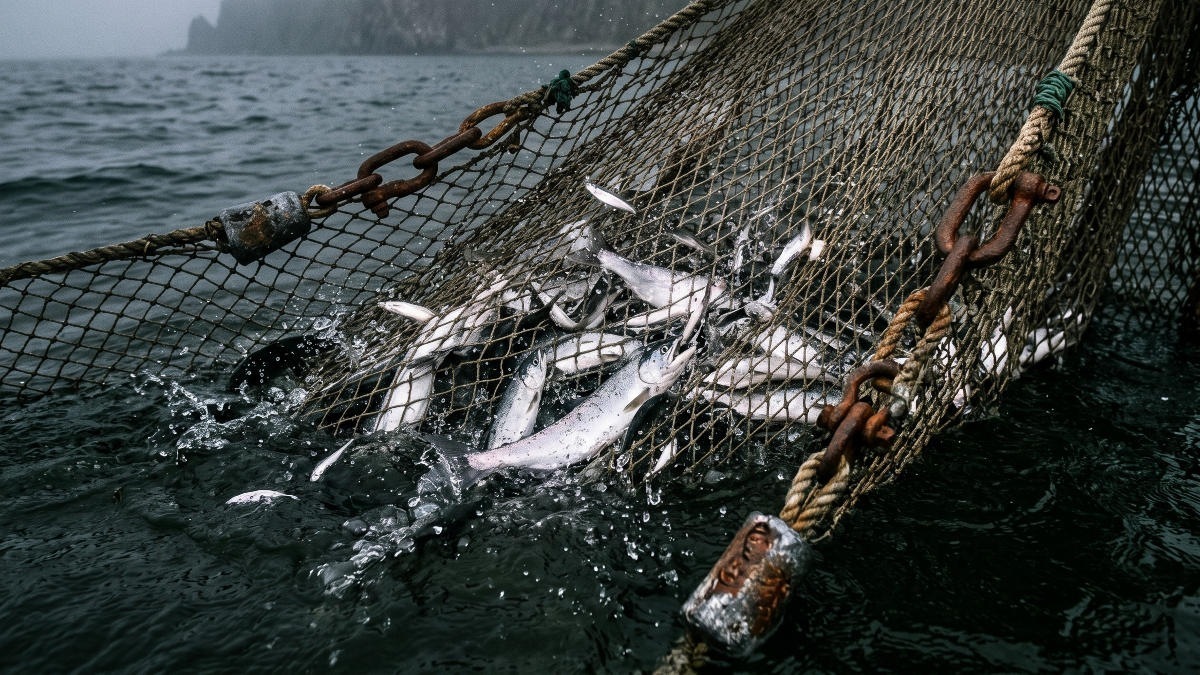
The 2026 salmon fishing season in the Russian Far East has demonstrated anomalies indicating structural shifts in marine ecosystems. Fishermen and biologists have recorded an atypical abundance of juvenile Pacific salmon off the coast of Kamchatka, alongside the migration of bluefin tuna into more northern latitudes.
Commercial catches this season have been dominated by smaller fish. The harvested pink salmon frequently weighed no more than 800 grams. This reduction in the physical size of the population is directly linked to a restructuring of the ocean food supply during the feeding period. Changes within these marine food chains are directly impacting the physical condition of the fish returning to spawn, according to Olga Maznikova, director of the anadromous fish department at the Russian Federal Research Institute of Fisheries and Oceanography.
Another unprecedented event was the capture of massive volumes of juvenile salmon in stationary nets. This phenomenon was observed in the waters of the Kamchatka Gulf and along the western coast of the peninsula. Such significant bycatch has been recorded for the first time since monitoring began, raising substantial concerns among fisheries scientists.
Parallel to the behavioral changes in salmon populations, warm-water species are expanding their ranges across the Far Eastern seas. The appearance of bluefin tuna in Russian waters is no longer a rare occurrence. In the marine areas of the Primorsky Krai and Sakhalin regions, this large predatory fish has become a standard target for commercial operations, sport fishing, and local festivals.
This year, the geographical presence of the predator has expanded significantly as the tuna reached colder northern latitudes. The recent catches in the waters of the Khabarovsk and Kamchatka regions represent a milestone – they are the first of their kind recorded in the entire history of observations. Biologists attribute these ecosystem changes to broader climatic fluctuations occurring throughout the northwestern Pacific Ocean.