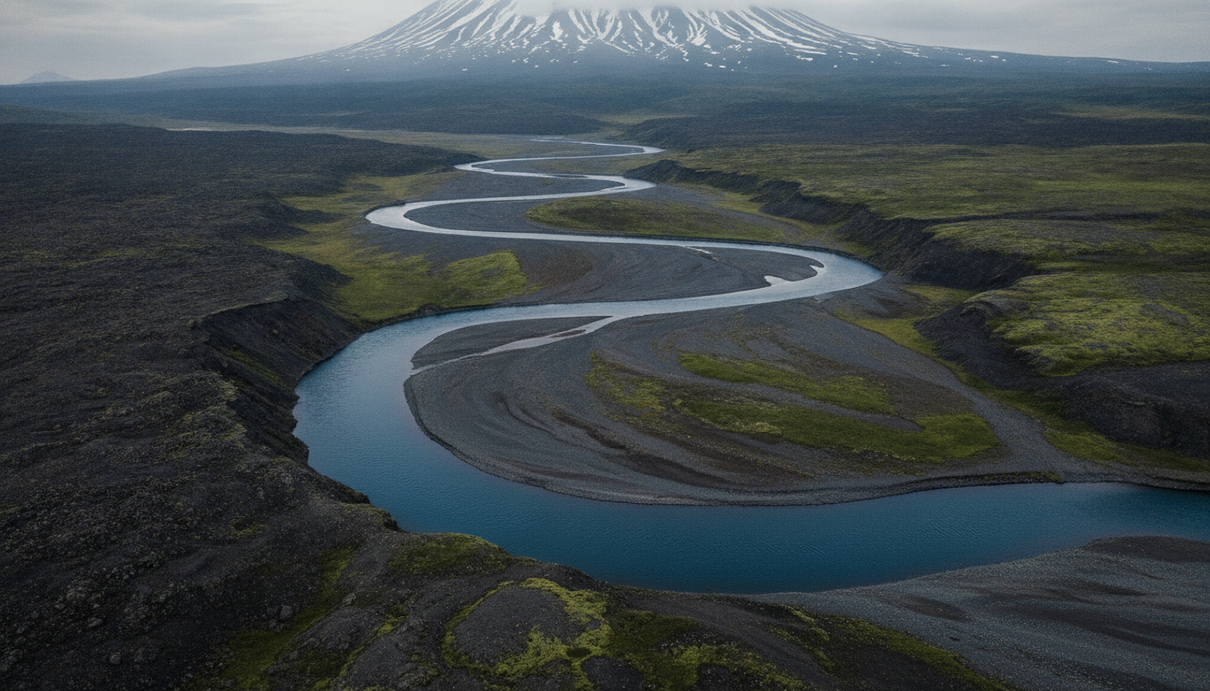
Hydrochemical studies of the Kamchatka Peninsula and adjacent waters reveal high concentrations of dissolved phosphorus in the Kamchatka River. Chemical concentrations are comparable to waterways in densely populated regions of China and India, despite the presence of only a few small settlements in the river basin. The high concentration of these nutrients is driven by active volcanoes rather than anthropogenic factors.
River runoff from volcanic watersheds serves as the primary source of nitrogen, phosphorus, and silicon along the eastern coast of the peninsula. These elements enter the water through volcanic ash, melting snow, and groundwater interacting with local rock formations. The eruption of the Shiveluch volcano in the spring of 2023 functioned as a natural experiment, occurring precisely between scheduled water sampling operations. Fresh volcanic ash begins releasing phosphorus into fresh water within the first minutes of contact. Consequently, the zooplankton biomass in the Kamchatka Gulf reached 2040 milligrams per cubic meter during the summer of 2023.
An alternative model of water chemistry formation operates in the northwestern part of the region. The Penzhina River, located in a basin entirely free of volcanoes, exhibits significantly lower concentrations of dissolved inorganic substances, with zooplankton volumes in the adjacent bay not exceeding 106 milligrams per cubic meter. The Penzhina gathers the majority of its organic carbon from thawing permafrost. The main supply of nitrogen and phosphorus for local coastal waters comes not from river runoff, but from the deep layers of the Shelikhov Gulf, which rise to the surface due to intense tidal mixing.
The natural excess of chemical elements on the eastern side of the peninsula can trigger ecological processes typically associated with heavily industrialized territories. A sharp shift in the balance between nitrogen and phosphorus provides an evolutionary advantage to dinoflagellates – microalgae that include highly toxic species. Such a chemical shift, initiated by a rapid influx of meltwater from high-altitude glaciers, constitutes a primary factor behind the toxic water bloom observed at Khalaktyrsky Beach in the autumn of 2020. Because the origin of nitrogen is irrelevant to microalgae, the natural environmental background generates the same risks for red tides as agricultural runoff.
Climate change impacts these regional systems in different ways. The western coast is warming faster than the eastern coast, with temperatures rising by 0.4–0.7 degrees Celsius per decade. This accelerated warming hastens permafrost degradation, which will eventually shift the nutrient balance of the Penzhina River toward groundwater sources and alter its overall chemical composition. The eastern region presents a contrasting scenario defined by a gradual reduction in glacier area, which decreased from 800 to 646 square kilometers between 2000 and 2014. These eastern waters react more rapidly to temperature fluctuations that affect winter snow accumulation and spring–summer melting.
Accurate forecasting of marine resource conditions requires the establishment of long-term observation databases. Daily drift experiments in Penzhina Bay are scheduled to begin in 2027 to measure the rates of organic matter formation and degradation. Assessing future ecological risks depends on regular measurements of mountain snowpack, continuous chemical analysis of river runoff, and uninterrupted satellite monitoring of phytoplankton populations along the coastline.