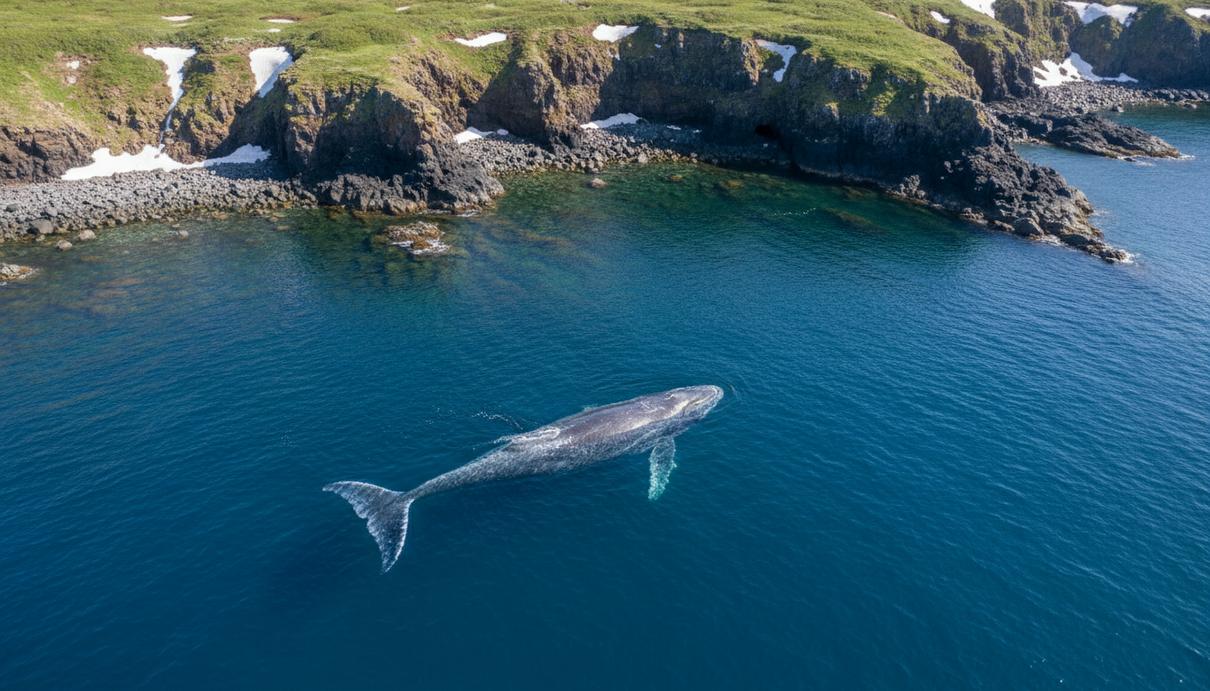
Gray whales undertake massive annual migrations, traveling between breeding grounds off the coast of Mexico and feeding areas in northern latitudes. While in warm waters and during transit, the animals do not feed, relying entirely on stored fat reserves. The active feeding period, which is critical for the survival of the population, takes place off the coast of Kamchatka, including the waters of the Kronotsky Nature Reserve.
During the current season, a distinct shift in the distribution of these animals is occurring. The Kronotsky Gulf currently hosts a low number of gray whales, with the majority of the population feeding within the boundaries of Olga Bay. This group consists primarily of females with calves and juvenile individuals. Adult solitary whales remain in the area only briefly before moving onward to the coast of Sakhalin or to undiscovered feeding grounds. This spatial dynamic is directly linked to the distribution of the food supply on the ocean floor.
The gray whale – the only species of baleen whale that feeds on benthos – extracts its food from the bottom layer by scooping up sediment rather than hunting in the water column. Their diet consists primarily of marine worms, mollusks, and various crustaceans. The survival of the Okhotsk Sea population depends heavily on the biological productivity of these bottom-dwelling communities.
To evaluate the condition of this crucial food supply, ongoing monitoring of the benthic zones is conducted. Monthly soil samples are collected using a manual bottom grab across a specifically marked grid of monitoring stations. The gathered material is then analyzed at the Kamchatka Branch of the Pacific Geographical Institute to determine the species composition, population density, and overall biomass of the organisms. This regular monitoring is essential for identifying and evaluating ecological patterns on the ocean floor.
Preliminary data indicate clear geographical variations in the animals’ diet. In Olga Bay, cumacean crustaceans serve as the primary food source for gray whales, whereas those feeding off the coast of Sakhalin consume mostly amphipods. To successfully rebuild their depleted fat reserves, the whales must feed almost continuously. The strict environmental protections of the Kronotsky Nature Reserve provide a secure habitat, allowing the marine mammals to forage safely without any human interference.