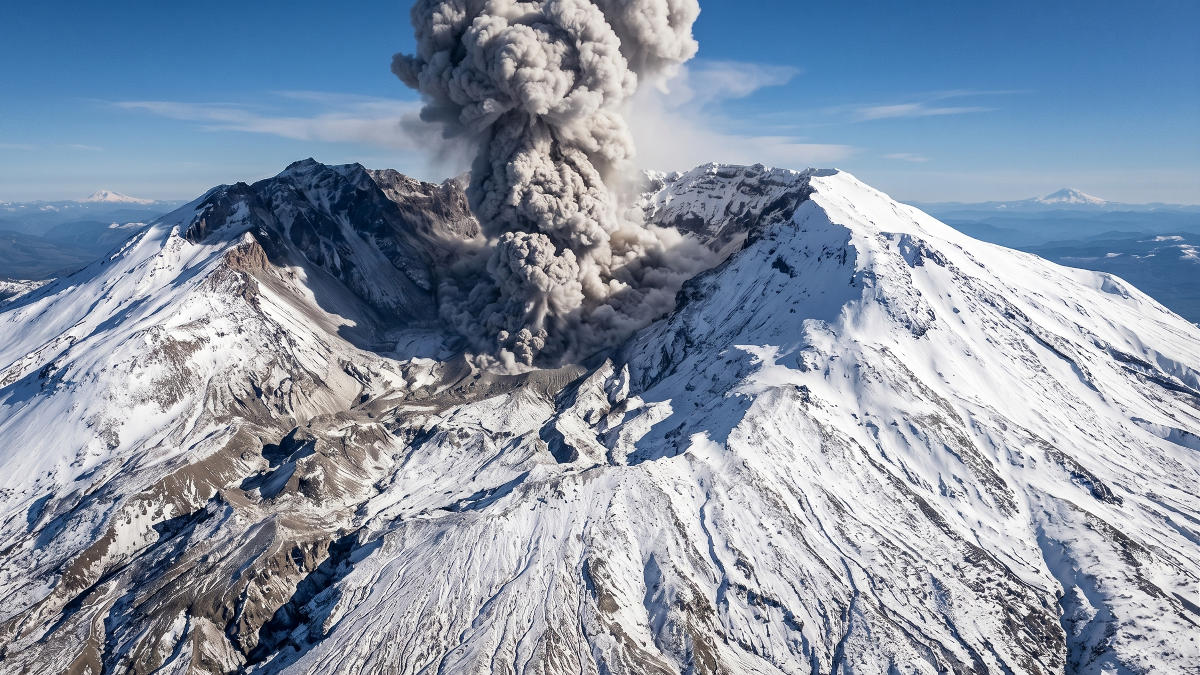
Kamchatka, Russia – Shiveluch, one of the most active volcanoes on the remote Kamchatka Peninsula, erupted dramatically on the evening of June 6th, sending an immense column of ash an estimated 12 kilometers (approximately 7.5 miles) above sea level. This significant event was promptly reported by the Kamchatka Volcanic Eruption Response Team (KVERT), which immediately heightened the aviation threat level to its maximum ‘red code’. This alert signifies a critical hazard to both domestic and international airline operations, warning of the severe risk posed to aircraft engines by abrasive volcanic ash.
The ‘red code’ status mandates that all flights either avoid the airspace near the volcano or be rerouted to ensure passenger safety and prevent potential catastrophic damage to jet engines. Volcanic ash, composed of finely pulverized rock and glass, can reduce visibility, abrade aircraft surfaces, and, most critically, melt in high-temperature engine components, causing engine stall. Such events can lead to widespread flight disruptions, impacting global travel and logistics far beyond Russia’s Far East.
The ash plume’s eastward trajectory has been confirmed by Russia’s Ministry of Emergency Situations (MCHS), indicating it is drifting towards Kamchatka Bay. Fortunately, early assessments suggest that no inhabited areas currently lie directly beneath the immediate path of the ash cloud, and no ashfall has yet been reported in the Ust-Kamchatsk district. However, the sheer volume and altitude of the ash pose a continued threat to aviation, necessitating ongoing surveillance and potential flight path adjustments across a wide region.
Despite the current lack of direct ashfall in populated areas, emergency services have issued crucial advisories to local residents, urging preparedness for potential ashfall. Should volcanic dust begin to descend, authorities recommend keeping windows and doors tightly sealed, minimizing outdoor exposure, and, if cleanup becomes necessary, utilizing respiratory and eye protection. These precautions are vital as volcanic ash, composed of sharp, abrasive fragments of volcanic glass, can cause severe irritation to mucous membranes and respiratory systems, posing significant health risks.
Shiveluch, an ancient geological marvel with an estimated age of 60,000 to 70,000 years, is situated approximately 50 kilometers from the settlement of Klyuchi and about 450 kilometers from the regional capital of Petropavlovsk-Kamchatsky. Its complex structure includes an ancient caldera, the remnants of Old Shiveluch, and the highly active dome of Young Shiveluch, whose frequent eruptions are a recurrent source of significant ash plumes. Its ongoing activity places it among the most formidable and closely monitored volcanoes within the volcanic arc of the Kamchatka Peninsula, which is itself a prominent part of the ‘Pacific Ring of Fire’.