The brown bear population in some of the most densely inhabited areas of Russia’s Kamchatka Peninsula is showing promising signs of recovery after a previous decline, according to recent findings by scientists. This ecological rebound signals a positive shift following a period marked by significant challenges for the region’s iconic wildlife.
Researchers from the Kamchatka Branch of the Pacific Institute of Geography, under the Far Eastern Branch of the Russian Academy of Sciences, conducted extensive aerial surveys to assess the current state of the bear population. Their preliminary estimates reveal an encouraging increase in density, with numbers up by 11.5% across the monitored territories compared to figures reported in 2025.
This positive trend stands in stark contrast to the situation in 2024, when these very same areas witnessed an unusual and alarming phenomenon: a mass exodus of predators towards human settlements. This abnormal behavior and the subsequent reduction in bear numbers were primarily attributed to a severe deficit of natural food sources, forcing the animals into unfamiliar territories in search of sustenance.
The recent monitoring efforts encompassed critical habitats surrounding key urban centers, including Petropavlovsk-Kamchatsky, Yelizovo, and Vilyuchinsk. The surveys also extended to the crucial wildlife corridors stretching from Nachikinsky Lake to Nalychevo Lake, as well as vast swathes of the peninsula’s eastern coastline. During these flights, biologists meticulously documented not only the bears themselves but also their dens and tracks, providing a comprehensive picture of their activity.
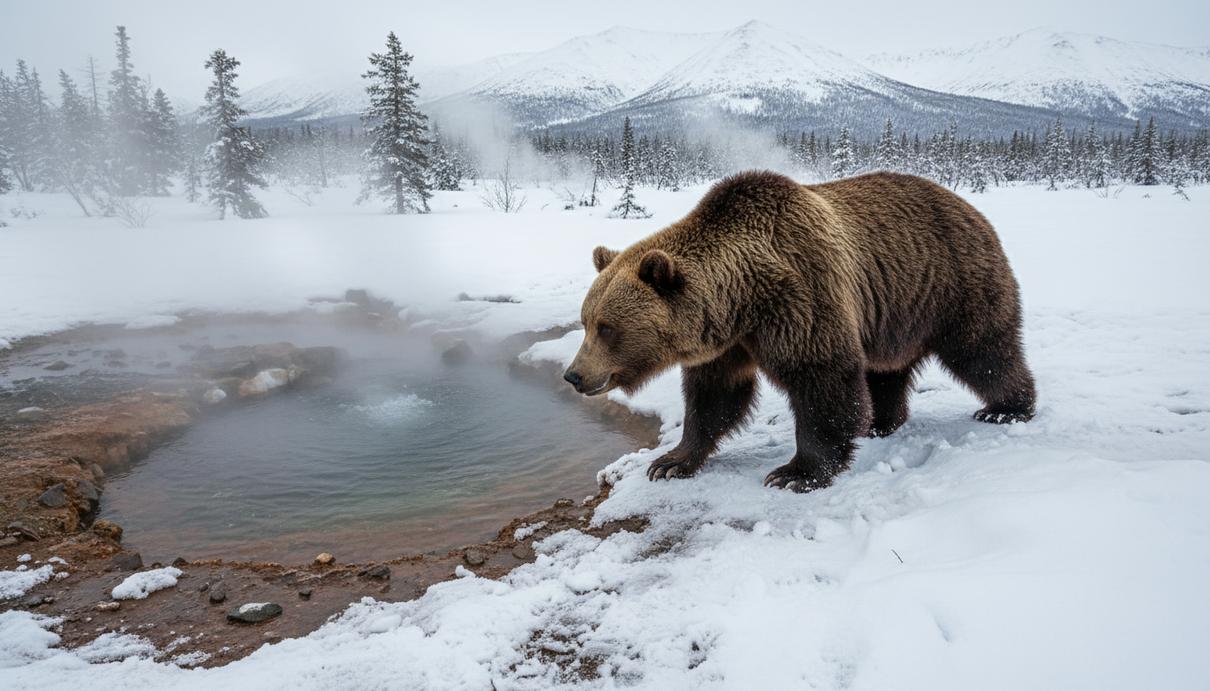
Of particular note was the high concentration of bear activity observed within the Nalychevo Nature Park, especially around areas with thermal water outflows. The warmth emanating from these ground heats serves as a natural magnet for bears during this period. Furthermore, ecologists reported a hopeful discovery in the vicinity of the Left Avacha River: the tracks of a female bear accompanied by cubs. This gradual return of the predators to their traditional habitats is a strong indicator of the normalization of the ecological situation following the previous year’s feeding crisis, underscoring the resilience of Kamchatka’s unique ecosystem.