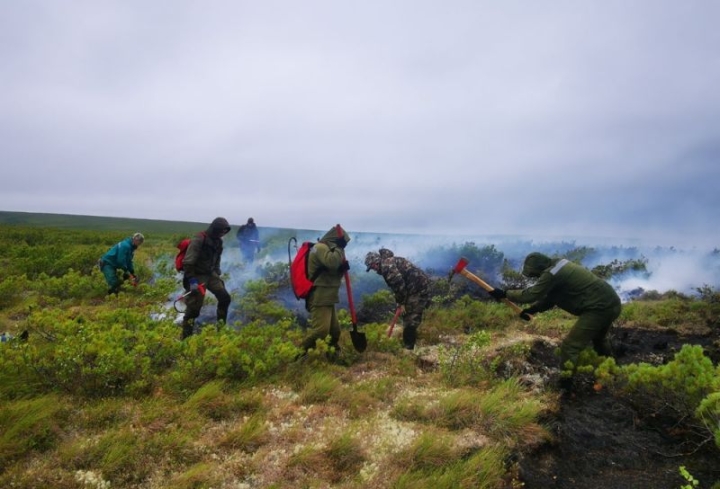
The remote and ecologically vital Kamchatka Peninsula in Russia’s Far East has officially entered its annual fire season, a critical period extending from May 1st through November 1st. This extended timeframe marks a heightened risk for the region’s vast and largely pristine nature reserves, including the Kronotsky and Koryaksky Reserves, and the South Kamchatka Federal Sanctuary, all of which are globally renowned for their unparalleled biodiversity and dramatic volcanic landscapes. Preparations are now in full swing to safeguard these natural treasures.
While significant snow cover persists across many high-altitude and sheltered sections of these protected areas, personnel tasked with their preservation are already fully mobilized. State inspectors within these reserves have undergone intensive training tailored to forest fire suppression, meticulously refining their skills in handling fire hoses, motorized pumps, manual tools, and other essential equipment. This proactive approach ensures that despite the challenging terrain and often unpredictable conditions, the frontline defenders of Kamchatka’s wilderness are fully equipped to tackle potential blazes.
To manage the vast and often inaccessible territories, specialized firefighting teams have been formed, equipped with all-terrain vehicles designed to navigate Kamchatka’s rugged landscape. An operational headquarters has also been established to coordinate efforts, as confirmed by Yevgeny Mikhailov, Head of the Forestry Department at Kronotsky Reserve. “We maintain round-the-clock monitoring of the situation and continuously interact with all agencies responsible for fire prevention and suppression on the peninsula,” Mikhailov stated. This comprehensive strategy is further augmented by advanced satellite monitoring and regular aerial patrols, providing vital early detection capabilities over immense areas.
The unique geography of Kamchatka presents a dual threat for fire ignition. While dry thunderstorms are a frequent natural cause of wildfires in the region, the peninsula’s intense volcanic activity—home to over 300 volcanoes, many of them active—also poses a unique risk, with eruptions or seismic events potentially sparking fires. However, human carelessness remains a significant concern. Officials highlight instances such as the improper use of signal flares, sometimes deployed by individuals attempting to deter the peninsula’s abundant brown bear population, as potential catalysts for devastating blazes.
Particular attention is being paid to several areas identified as having a heightened fire risk. These include the Kronotsko-Bogachevskaya tundra, the Pikhtovaya Grove, and the Schapinsky spruce forests within the Kronotsky Reserve, as well as the forest-tundra of Parapolsky Dol in the Koryaksky Reserve. These geographically distinct and ecologically vital complexes are crucial habitats for dozens of species, many of which are listed in Russia’s Red Data Book as endangered or vulnerable. The efforts to prevent and suppress fires are therefore not merely about protecting hectares of land but safeguarding irreplaceable biodiversity that contributes to the global ecological balance.