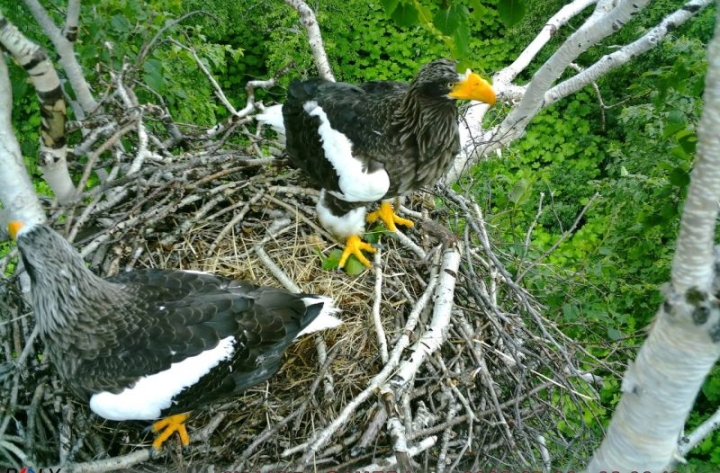
Kamchatka, a remote and biodiverse peninsula in Russia’s Far East, is once again at the forefront of captivating ecological discoveries. Scientists from the Vitus Bering Kamchatka State University and the “Volcanoes of Kamchatka” Natural Park have embarked on an ambitious study, peering into the secretive world of the Steller’s sea eagle (Haliaeetus pelagicus) – one of the largest and most majestic raptors on Earth. Their latest findings, gleaned from an intensive camera trap initiative, offer an unprecedented glimpse into the hidden lives surrounding these magnificent birds at the Nachikinskoye Lake sanctuary.
Under the leadership of biologist Miroslav Babushkin, a dedicated team of ornithologists strategically placed camera traps near two Steller’s sea eagle nests along the lake’s pristine coastline. The primary objective was to document the raptors’ elusive nesting activities and uncover the intricate dynamics of their immediate environment. While the current breeding season is underway, last year presented an intriguing mystery: despite regular visits and even extensive repairs to one nest spanning over 20 days, the eagle pair did not reproduce. The precise reasons behind this skipped breeding cycle remain a subject of ongoing scientific inquiry.
Remarkably, the camera traps captured a bustling level of activity around the eagles’ nests during their absence, transforming these impressive structures into temporary hubs for local wildlife. An astonishing 27 different bird species and two mammal species were documented visiting the unoccupied nests. These ranged from small passerines like yellow wagtails, bush warblers, brown-headed nuthatches, to larger corvids such as ravens and magpies, frequently observed foraging for food within the nest’s soft lining.
Among the most significant discoveries was the presence of the Kamchatka Goshawk, a rare and critically important species listed in both the Russian and Kamchatka Red Books, with its population on the peninsula estimated at no more than three thousand individuals. Mammalian visitors also added a fascinating dimension to the study: sables were recorded frequenting the nests year-round, while stoats made appearances exclusively during the winter months, highlighting the varied roles the nests play in the local ecosystem across seasons.
Perhaps one of the most unexpected and dramatic events captured by the remote cameras involved a pair of Eurasian hobbies (Falco subbuteo). These relatively small falcons, weighing only 200-350 grams, boldly attempted to claim one of the massive sea eagle nests as their own. However, their ambitious endeavor was swiftly repelled by the sheer presence and defensive might of the true residents – the formidable 8-kilogram Steller’s sea eagles, underscoring the dominance of these apex predators.
Officials from the “Volcanoes of Kamchatka” Natural Park emphasize the critical role of Steller’s sea eagles as “umbrella species.” This ecological concept means that protecting these magnificent raptors and their extensive habitats indirectly safeguards a multitude of other species and the overall health of the ecosystem. The ongoing research at Nachikinskoye Lake not only deepens our understanding of these iconic birds but also underscores the broader importance of robust conservation strategies for this fragile and unique environment.
As scientists continue their dedicated work, unraveling further mysteries of the Steller’s sea eagles’ lives, the insights gained will be instrumental in informing effective preservation efforts. The careful and enlightened protection of Nachikinskoye Lake is paramount, ensuring the long-term survival of not only the eagles but also the interconnected web of life that thrives within this invaluable Kamchatka wilderness.