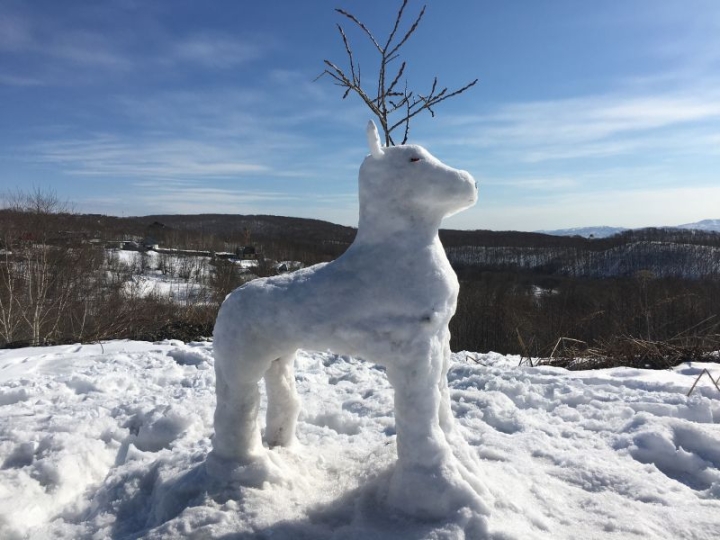
In a unique fusion of art and environmental advocacy, Russia’s Kronotsky Nature Reserve, a pristine jewel of the Kamchatka Peninsula, has launched an innovative snow sculpture competition. This initiative seeks to heighten public awareness and appreciation for the region’s extraordinary biodiversity, underscoring the critical global importance of preserving these delicate ecosystems and their inhabitants.
The ‘Inhabitants of Protected Kamchatka’ contest invites local residents aged four and above to sculpt snow figures of animals indigenous to the peninsula’s protected areas. Participants are encouraged to depict species found within the Kronotsky and Koryaksky Nature Reserves, as well as the South Kamchatka Federal Sanctuary, with a particular focus on rare and endangered wildlife. This creative challenge aims to foster a deeper connection between the community and the unique fauna that defines this remote and ecologically vital region.
Emphasizing environmental responsibility, the competition strictly prohibits the use of non-biodegradable materials such as plastic items, balloons, or rubber gloves in the creation of the snow sculptures. Entries are evaluated across individual, group, and family categories, promoting collective engagement and intergenerational learning about conservation principles. Each author or group is permitted to submit one artwork, ensuring a diverse representation of Kamchatka’s wild inhabitants.
Participants are required to submit high-resolution photographs of their completed snow figures by February 25th. The contest culminates with the announcement of winners on March 3rd, a date deliberately chosen to coincide with World Wildlife Day. This strategic timing amplifies the competition’s message, aligning local efforts with a global observance dedicated to celebrating and protecting wild animals and plants, thereby adding an international dimension to this local conservation drive.
Through this imaginative endeavor, the Kronotsky Nature Reserve transcends conventional environmental education, transforming the winter landscape into a vibrant canvas for ecological awareness. It serves as a compelling reminder that grassroots initiatives, however artistic, can significantly contribute to global biodiversity awareness and the collective preservation of our planet’s shared natural heritage, particularly in regions as ecologically significant and breathtaking as Kamchatka.