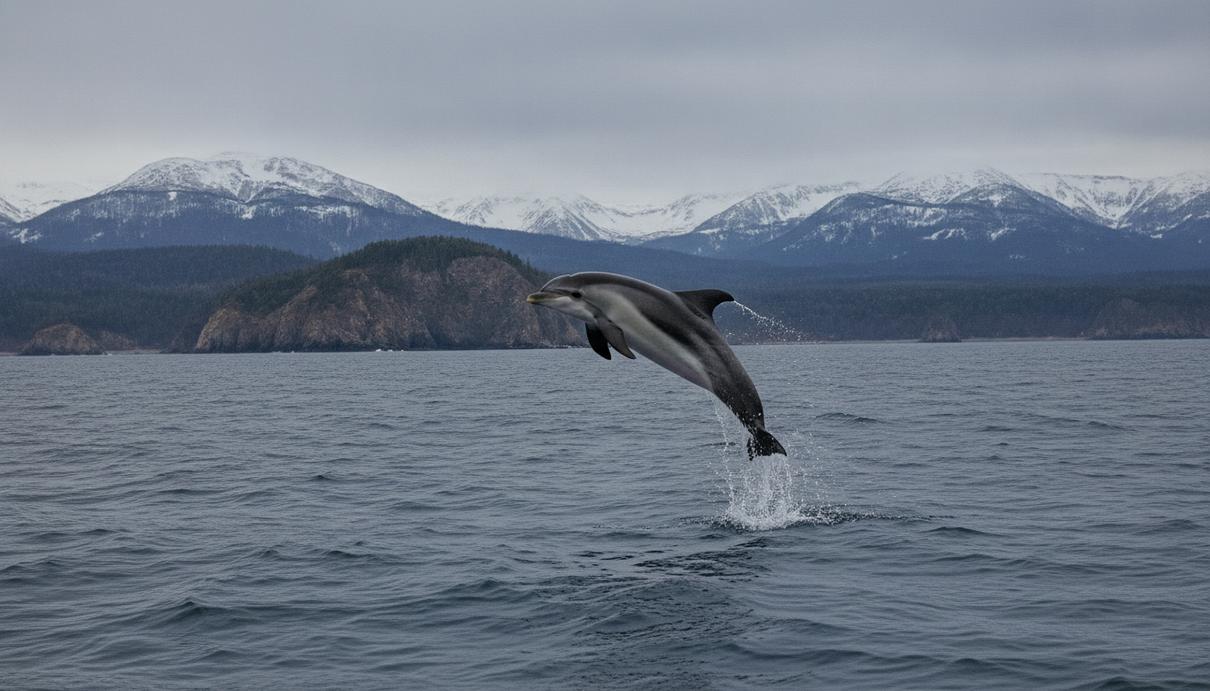
Researchers have recorded the appearance of a Pacific white-sided dolphin in the Avacha Gulf off the coast of Kamchatka. This species is atypical for the region and typically inhabits more southern latitudes. The discovery occurred during an expedition that was forced to alter its route due to stormy weather.
The research group initially planned to reach Cape Piramidny, but a sudden increase in wind and high waves forced the vessel to turn back. Later, near Peschanka Bay, expedition members noticed a marine mammal regularly leaping to the surface. A preliminary visual assessment suggested an encounter with a harbor porpoise, which is widely distributed in local waters. Subsequent analysis confirmed the specimen’s species identity – it was a Pacific white-sided dolphin.
The traditional habitat of this species encompasses the temperate waters of the North Pacific Ocean, while in Russian territorial waters, the animals are most frequently found near the coast of the southern Kuril Islands. The appearance of the dolphin so far north presents specific interest to biologists. Researchers recorded high activity in the specimen and noted an unusual yellowish tint to its skin. Specialists attribute this change in pigmentation to an accumulation of microscopic algae, a characteristic condition during prolonged migrations.
The exact reasons for this warm-water species entering the waters of the peninsula have not yet been established. Such isolated incidents may be driven by the search for a food supply, changes in ocean current temperatures, or short-term climate fluctuations. Documenting these deviations from standard habitats allows oceanographers to track the dynamics of ecosystem processes in the Far Eastern seas.