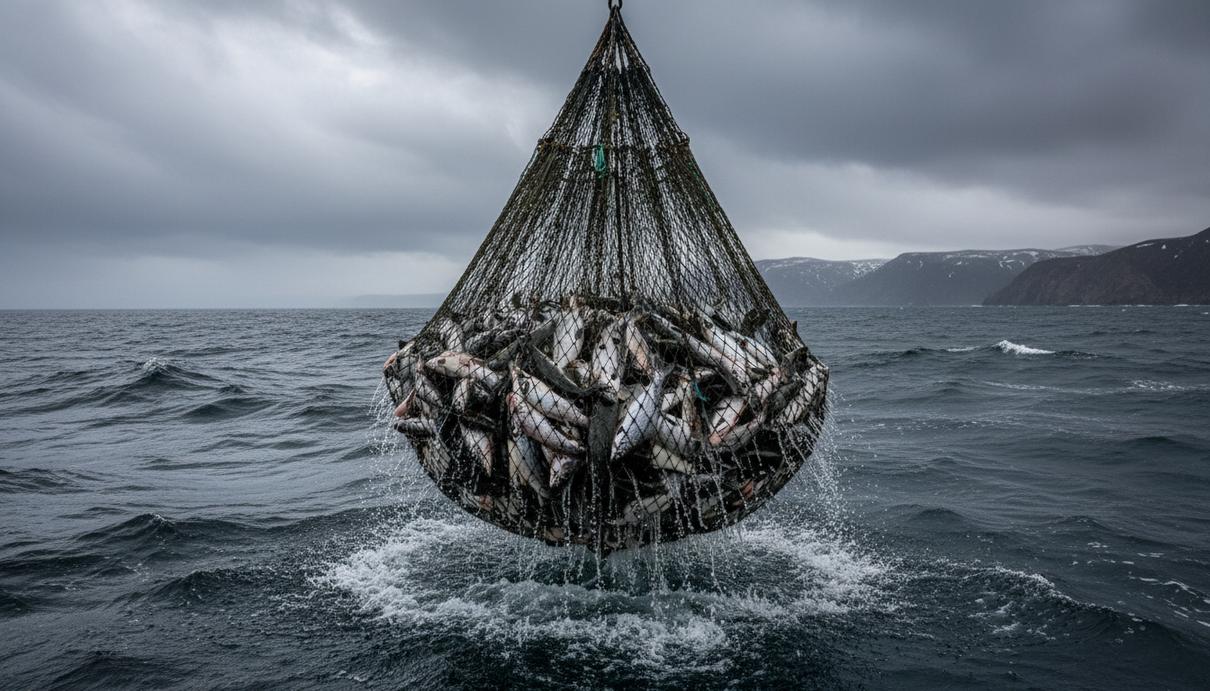
The Federal Agency for Fishery has evaluated the initial results of the salmon fishing season that recently began in the Russian Far East. Amid a decrease in average fish weight and adverse weather conditions, the baseline forecast for the Pacific salmon catch in the macroregion is set at 227,000 tons, of which 117,000 tons are expected from the Kamchatka Territory. The specialized operational headquarters convened directly on the Kamchatka Peninsula, with the participation of agency head Ilya Shestakov and representatives from marine research institutes.
Specialists from the All-Russian Research Institute of Fisheries and Oceanography are continuing to monitor pre-anadromous pink salmon in the northwestern Pacific Ocean. The research phase within the Russian exclusive economic zone concluded in late June, after which survey vessels moved into international waters. Preliminary data indicate that approximately 355 million pink salmon are migrating toward the Sea of Okhotsk basin. Under standard biological parameters, this volume would yield a catch of around 230,000 tons. However, scientists are currently recording a notable decrease in the body mass of the fish in trawl samples. Consequently, relevant departments are preparing for multiple operational scenarios as the fishery develops.
Current trawl surveys have confirmed a low proportion of the western Kamchatka pink salmon population in the overall migration patterns. The fishing situation is further complicated by climatic factors – hydrometeorological forecasts predicting increased storm activity and heavier precipitation off the coasts of Kamchatka, Sakhalin, and the Primorsky Territory have materialized. At present, the bulk of the Far Eastern catch consists of Kamchatka sockeye and pink salmon caught in the Primorye subzone.
On the eastern coast of the peninsula, within the Kamchatka River basin, approximately 2,000 tons of sockeye salmon were harvested by early July. The migration of the early salmon form is now concluding in this area, with preparations underway for the later arrivals. Given the relatively low rates of fish returning to the rivers, primary attention is being directed toward population conservation and ensuring that spawning fish can reach their grounds. To facilitate this, the regional commission for anadromous species has introduced additional passing days in the waters of the Kamchatka Gulf. Meanwhile, the Ozernovskaya sockeye fishery, which opened on July 1, is currently demonstrating average long-term catch values.
The most intensive approaches of pink salmon on the peninsula are projected to occur in the central and southern sectors of the Karaginsky Gulf. On the western coast of Kamchatka, the largest volumes are expected in the Bolshaya River basin, as well as in the area between the Kikhchik and Icha rivers. Final determinations regarding the overall parameters of the current fishing season will be formulated once the marine expeditions are fully completed and the scientific headquarters has processed all collected data.