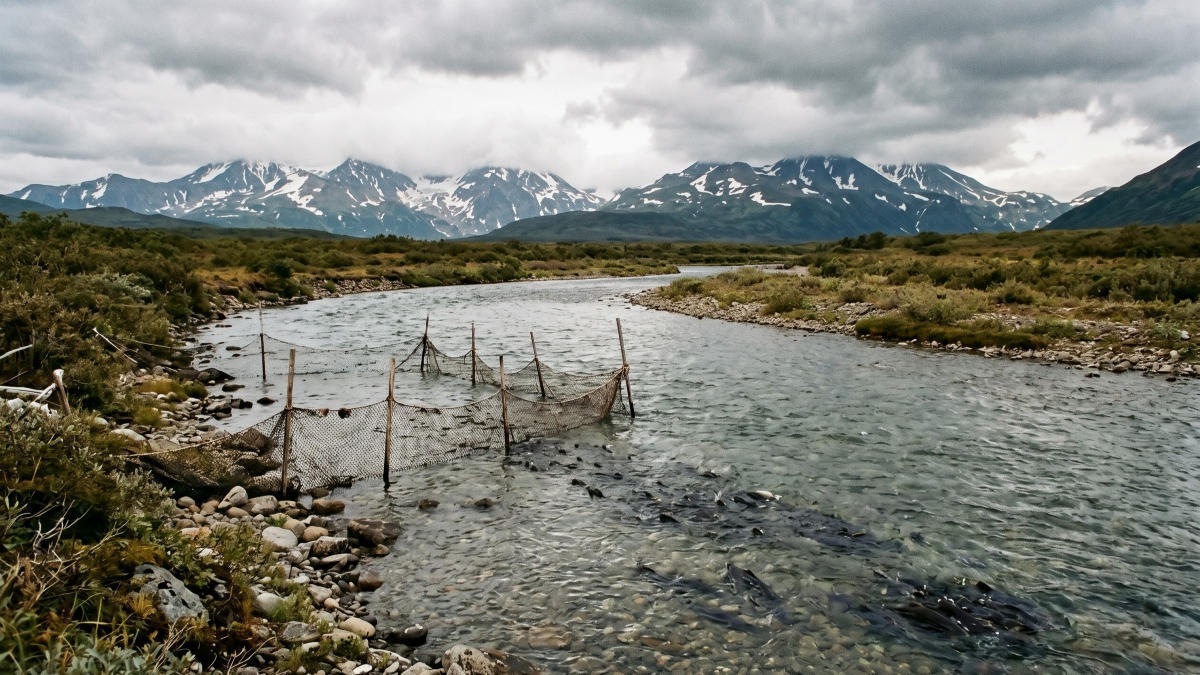
The Kamchatka Peninsula, a critical epicenter for Pacific salmon fisheries, has officially commenced its highly anticipated salmon season, known locally as “putina.” The Ust-Kamchatsky district was among the first areas to open for river fishing on June 1st, marking the beginning of a meticulously planned harvest crucial for both regional prosperity and global seafood markets.
This season, the Kamchatka region aims for a substantial catch of 117,400 tonnes of Pacific salmon, representing more than half of the total projected harvest for Russia’s entire Far East. The commercial fishing effort is strategically balanced across the peninsula’s diverse ecosystems, with approximately 59,500 tonnes expected from the eastern coast and 57,900 tonnes from the western coast, reflecting a careful allocation of resources.
The fishing schedule is not arbitrary; it is meticulously crafted based on scientific recommendations to ensure unimpeded passage for salmon to their vital spawning grounds. Commercial nets are set to enter Kamchatka Bay on June 4th, followed by Kronotsky Bay on June 7th, Olyutor Bay on June 10th, and Karaginsky Bay on June 15th. On the western coast, enterprises in the Tigilsky district will initiate their operations in late June, with the Ozernaya River opening for harvest on July 1st. Other key western districts, including Ust-Bolsheretsky, Sobolevsky, and Penzhinsky, will join the putina on July 11th, showcasing a phased approach designed to protect fish stocks.
Simultaneously, recreational fishing also began on June 1st across most of the peninsula’s water bodies, offering opportunities for angling enthusiasts. However, some areas, such as the Paratunka and Avacha rivers, have delayed their opening until July 5th to allow for population recovery. This commitment to conservation is further evidenced by strict “pass-through days”—periods when fishing is entirely prohibited. Most rivers observe three non-fishing days per week, while specific areas like the Sobolevsky district and the Ozernaya River implement a “two days fishing, two days resting” rotation. Similar rigorous restrictions apply to marine pound nets, underscoring a comprehensive conservation strategy.
Organizers of recreational fishing have already opened sales for permits to licensed areas, with prices varying by species. Pink salmon permits cost 30 rubles, chum and coho salmon are 100 rubles, sockeye salmon 150 rubles, and the prized Chinook salmon commands 500 rubles. Strict daily catch limits are also imposed per person: a maximum of twenty pink salmon, ten chum salmon, five sockeye or coho salmon, and only one Chinook salmon are allowed. In an additional measure for the Ust-Kamchatsky district, Mondays, Tuesdays, and Wednesdays have been designated as pass-through days for recreational anglers.
Regional authorities, in close collaboration with fisheries scientists, are maintaining continuous oversight of the salmon season’s progress. Andrey Zdetovetsky, the regional Minister of Fisheries, emphasized that the primary objectives for the season are organized harvesting, sustained economic support for coastal communities, and the preservation of crucial fish resources for future generations. He highlighted that the long-term success and stability of the industry are intrinsically linked to the strict adherence to environmental regulations and the protection of salmon migration routes to their ancestral spawning grounds, a testament to Russia’s broader commitment to sustainable resource management in its vital Far Eastern territories.