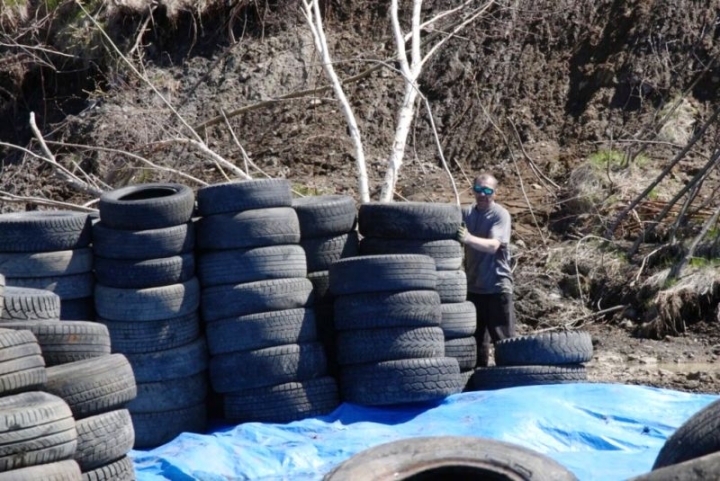
Kamchatka, Russia – In a remarkable display of environmental stewardship and community engagement, residents of Russia’s far-eastern Kamchatka Peninsula have successfully collected and diverted some 28,000 discarded vehicle tires from potential environmental contamination in just ten days. This swift and impactful initiative, announced by the regional Ministry of Natural Resources and Ecology, underscores a growing commitment to sustainable waste management and circular economy principles, transforming a local problem into a model of environmental action.
Weighing an astounding 318 tons, this massive volume of rubber waste is not destined for landfills or illegal dumping. Instead, it will undergo a crucial transformation process, being meticulously reprocessed into valuable rubber crumb and durable tiles. These recycled materials are slated for immediate use in revitalizing public spaces, constructing safe children’s playgrounds, and enhancing sports facilities across the region, effectively turning a pervasive environmental menace into tangible community assets.
The ongoing program has set an ambitious target of collecting approximately 70,000 used tires throughout the year, with the initial phase demonstrating significant public enthusiasm and participation. While the precise conclusion date for the current campaign remains undefined, collection points strategically located in Petropavlovsk-Kamchatsky and the Elizovsky district ensure broad accessibility for all residents eager to contribute to the region’s green future.
What truly distinguishes Kamchatka’s campaign is its innovative incentive structure, meticulously designed to actively encourage widespread participation. Unlike many traditional waste management programs, there are no limitations on the number of tires an individual can submit. Furthermore, those bringing in up to 15 tires receive expedited service, a thoughtful gesture recognizing consistent, smaller-scale efforts. Each submitted tire earns participants 50 rubles (approximately $0.55 USD) and 50 bonus points through the regionally specific “KAMball” reward system, effectively monetizing responsible waste disposal and fostering a shared sense of environmental responsibility.
This year’s rapid success builds upon a robust foundation established in previous campaigns. Last year alone, Kamchatka residents contributed to the recycling of approximately 113,000 tires – with some 67,000 collected in the spring and nearly 43,000 during the autumn drives – illustrating the sustained effectiveness of these participatory environmental schemes. Through these collective eco-conscious efforts, Kamchatka’s residents collectively earned around 5.5 million rubles (approximately $60,000 USD), directly benefiting the local economy while simultaneously promoting vital environmental health. This integrated model offers a compelling case study for other regions worldwide grappling with effective and engaging waste management solutions.