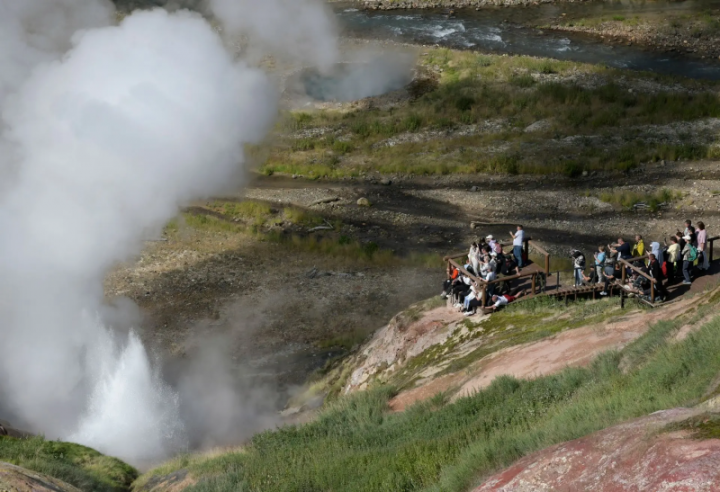
Today marks the 85th anniversary of the discovery of the legendary Valley of Geysers on Russia’s remote Kamchatka Peninsula. Uncovered on April 14, 1941, this natural marvel, part of the UNESCO-listed Volcanoes of Kamchatka, remains one of the world’s most spectacular geothermal wonders, underscoring both its geological significance and the long-standing commitment to its preservation.
Nestled within the Kronotsky State Nature Reserve, the Valley of Geysers is home to approximately 60 geysers concentrated along the Geysernaya River gorge, alongside numerous hot springs and mud pots. What sets this geological marvel apart globally is its remarkable preservation: it stands as one of the few places on Earth where human presence has not led to the destruction of any of its delicate natural fountains, a testament to strict environmental protection measures.
Vsevolod Yakovlev, Director of the Kronotsky State Nature Reserve, emphasizes the Valley’s dual role. “The Valley of Geysers is a natural laboratory, offering scientists a vast field for research,” Yakovlev stated. “They monitor changes in geyser activity and study organisms that thrive in extreme high-temperature environments.” Beyond its profound scientific value, he added, “it is also one of the most beautiful places on Earth, attracting tourists from around the globe. Our crucial task is to ensure visits are safe for this fragile ecosystem, preserving this unique corner of nature for generations to come.”
As the Valley of Geysers celebrates this significant milestone, its enduring existence serves as a powerful example of dedicated conservation and the inherent resilience of nature. It continues to draw international attention for its scientific contributions and unparalleled beauty, standing as a beacon for sustainable tourism and environmental stewardship in an increasingly globalized world.