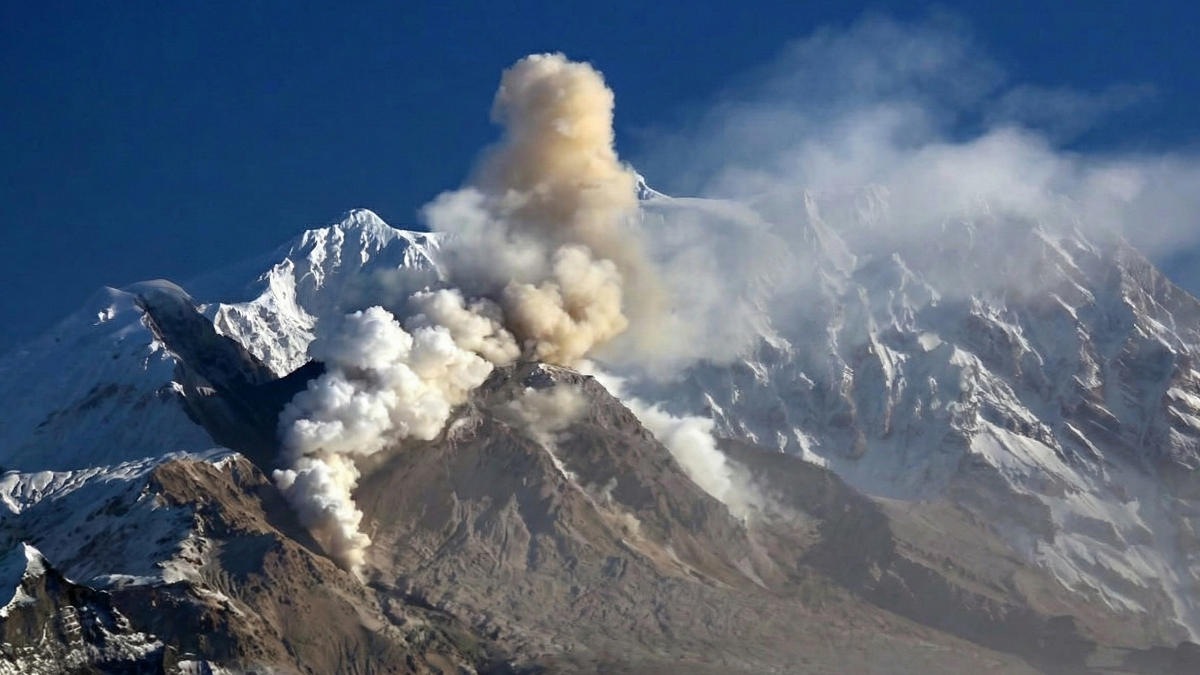
Kamchatka’s Shiveluch, one of Russia’s most active and imposing volcanoes, is currently experiencing a significant escalation in its eruptive cycle, drawing heightened scrutiny from vulcanologists and international aviation authorities alike. Situated in the remote and geologically volatile Russian Far East, this ancient stratovolcano is now characterized by an actively growing lava dome within its crater, a phenomenon closely observed via satellite imagery and ground-based sensors.
Monitoring stations are consistently detecting a substantial thermal anomaly above the crater, coupled with regular and vigorous emissions of gas-steam mixtures. According to the Kamchatka Volcanic Eruption Response Team (KVERT), a globally recognized authority in volcano surveillance, superheated magma is steadily making its way to the surface. This ascent is accompanied by intense degassing from deep within the earth, signaling a robust and dynamic magmatic system at work beneath the surface.
The rapidly forming lava dome has already reached an imposing height of 2.5 kilometers. This intense activity has led to the issuance of an “orange” aviation warning code for Shiveluch, a critical alert level signifying a significant risk of sudden and potentially catastrophic ash explosions. Such events can propel fine particles of volcanic glass and corrosive gases high into the atmosphere, posing a grave threat to low-flying aircraft and helicopters. These abrasive particles can cause severe damage to jet engines, leading to engine failure and disrupting vital air routes across the North Pacific.
Beyond the immediate aviation concerns, Shiveluch’s energetic exhalations offer crucial insights into the volcano’s internal chemistry. The voluminous plumes of gas and steam are not merely visual spectacles; they serve as indicators of the magma’s composition, with specialists tracking the output of sulfur dioxide and carbon dioxide. While these emissions currently exert localized effects on the atmospheric temperature and composition over the Kamchatka Peninsula, a major eruption could have more widespread environmental ramifications, potentially impacting regional climate patterns and air quality.
Shiveluch itself is a colossal geological formation, with its origins stretching back an estimated 60,000 to 70,000 years. Structurally complex, it encompasses an ancient caldera, the remnants of Old Shiveluch, and the currently active cone known as Young Shiveluch. Despite its formidable activity, the main zone of eruption lies approximately 50 kilometers from Klyuchi, the nearest inhabited settlement, and about 450 kilometers north of Petropavlovsk-Kamchatsky, the regional capital. This relatively isolated location, however, does not diminish its potential impact on international air travel and the unique ecosystems of Kamchatka, a UNESCO World Heritage site known for its pristine wilderness and abundant wildlife.
Scientists continue their rigorous instrumental monitoring of Shiveluch, with stable thermal emissions underscoring the elevated pressure within its magma chamber. While direct threats to local infrastructure and populations remain low for the immediate future, the long-term deposition of volcanic aerosols presents an ecological concern. These fine particles, often acidic, have the potential to alter the pH balance of soils and snow cover across the adjacent taiga forests and tundra, impacting flora and fauna in this ecologically sensitive region.
The ongoing vigilance at Shiveluch serves as a potent reminder of the Earth’s dynamic forces and the interconnectedness of regional geological events with global systems like air travel and atmospheric chemistry. As the Pacific Ring of Fire continues its restless activity, the eyes of the international community remain fixed on this majestic, yet potentially disruptive, natural wonder in Russia’s Far East.