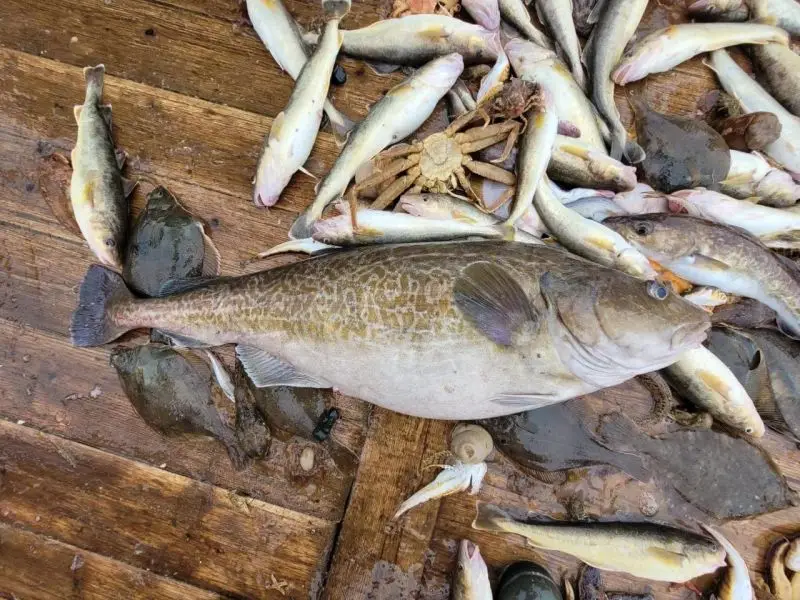
Cod biomass on the West Kamchatka shelf of the Sea of Okhotsk has increased by 36 percent compared to 2024. The collected data will serve as the foundation for stock assessments and the determination of sustainable catch quotas for pollock, crab, and other marine biological resources for the years 2027 and 2028.
An expedition aboard the research vessel Vladimir Safonov surveyed 33,000 square kilometers of the marine area and conducted 110 trawl operations. Among the demersal fish species recorded, flounders accounted for 47 percent of the total biomass, followed by cod at 26 percent and sculpins at 15 percent. The crab population was predominantly composed of red king crab at 53 percent, alongside Bairdi snow crab at 28 percent and blue king crab at 10 percent.
The marine surveys also documented a high biomass of benthic invertebrates on the seafloor, reaching 81 tons per square kilometer – a figure 20 times higher than the regional average. Environmental monitoring recorded a 2.5 °C warming of the upper water layer. In contrast, temperatures in the near-bottom layer at the center of the surveyed area dropped to -2 °C.