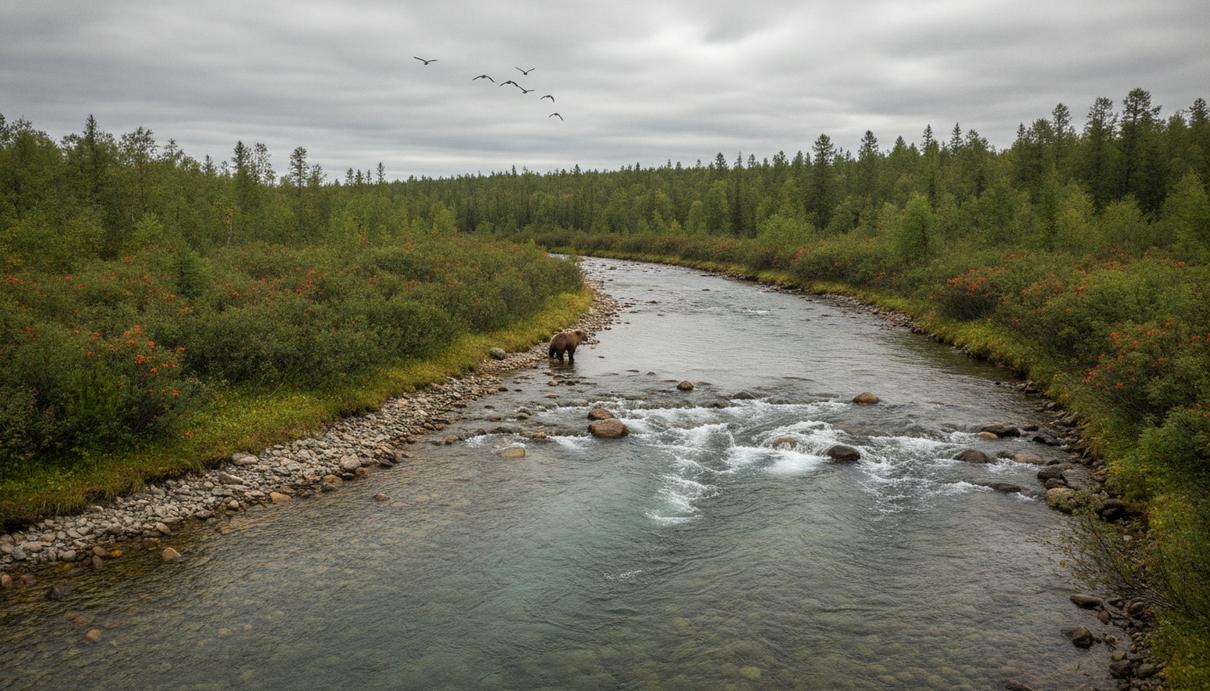
A new mechanism aims to reduce conflicts between brown bears and residents of the Kamchatka Peninsula by incorporating a specific wildlife allocation into commercial salmon fishing quotas. The introduction of mandatory non-fishing days on spawning rivers will ensure the predators have access to natural food, reducing their need to seek alternative sources of nourishment.
The current season in Kamchatka remains stable, with the frequency of wild animals entering settlements comparable to last year. The primary drivers of bear migration toward human populations are high population density and local shortages in the natural food supply. A lack of fish typically forces the predators to change their habitats by mid-summer, a trend often exacerbated in autumn by poor berry and nut harvests.
The availability of plant-based food has stabilized the situation on the peninsula this year. Rowan berries and dwarf pine cones ripened in the Kamchatka forests by early September, prompting a retreat of bears from water bodies, particularly along the Bystraya River in the Yelizovsky District. Biological trace analysis confirms that the animals have shifted their diet to wild plants and moved deeper into the forest.
Open access to organic waste remains the key anthropogenic cause of predators appearing near residential and industrial zones. Bears possess a highly developed spatial memory. Once an animal discovers food waste in a refuse container or on a private plot, it permanently includes that location in its regular foraging route. The complete isolation of household waste and fish remnants from the natural environment is the only effective solution to this issue.
Incidents involving wild animals occur regularly across other regions of Siberia and the Russian Far East. Municipal authorities in the Kamchatka settlement of Palana implemented a curfew to ensure the safety of children. In the Krasnoyarsk territory, increasingly frequent bear attacks – including fatal encounters – resulted in a criminal investigation. Regional natural resource officials are currently under investigation for suspected negligence in controlling the population of dangerous animals.
Lethal population control through culling cannot resolve the issue without systemic prevention. The primary strategies for protecting the public remain proper waste management and the integration of the biological needs of wildlife into the planning of commercial fishing operations.