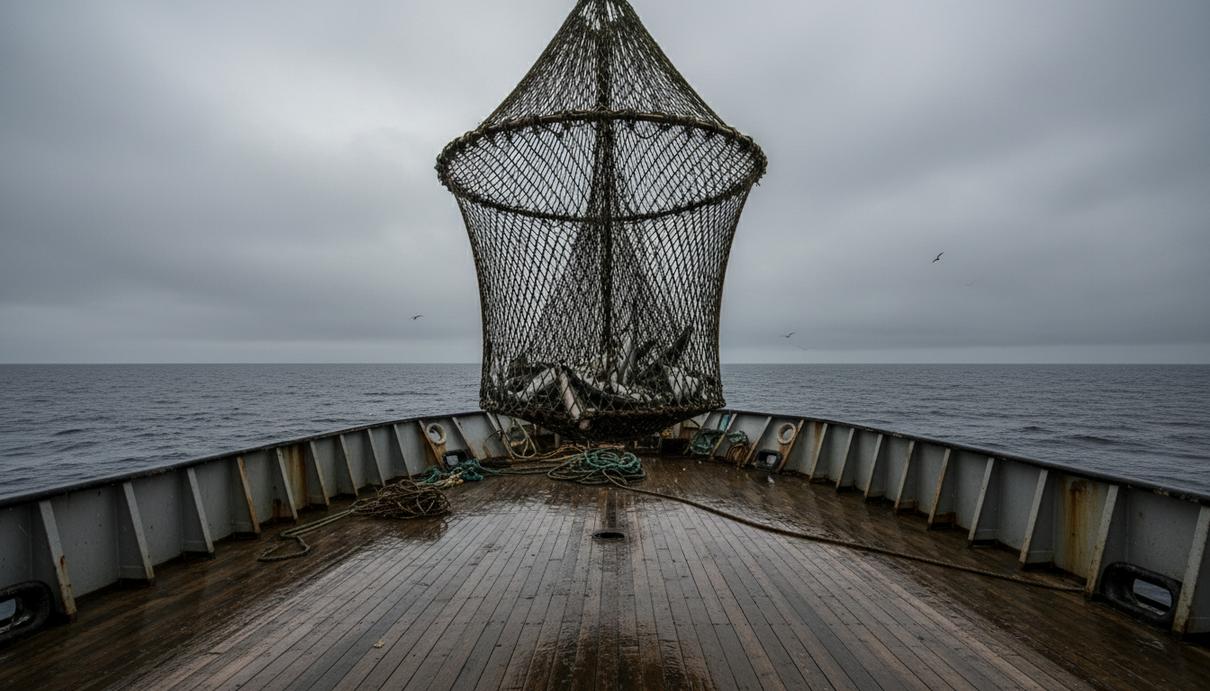
The salmon fishing season in Kamchatka is nearing its conclusion with yields that may prove to be the lowest in forty years. By late August, regional enterprises had harvested 54,400 tons of wild salmon. This volume represents less than half of the initial forecast, which projected a catch of 117,400 tons. As the active phase of the fishery typically concludes in September, the industry is unlikely to achieve these modest targets.
Pink salmon constitutes the majority of the current season’s yield, with fisheries securing 20,500 tons. Sockeye and chum salmon follow, with harvests of 17,700 and 13,800 tons respectively. The extraction of other salmon species remains minimal, comprising approximately 2,000 tons of coho salmon and less than 200 tons of chinook and cherry salmon combined. The weak performance on the peninsula is simultaneously depressing the overall statistics for the Russian Far East, where the aggregate catch currently stands at 87,000 tons. Kamchatka fisheries continue to account for 62 percent of this regional total.
Sharp declines in red fish harvests are a consequence of the natural cyclical reproduction patterns of Pacific salmon – yet the current situation stands out even when compared to previous low-yield years. Historic maximums in 2018 and 2023 generated nearly half a million tons of salmon per season for the region, while average years typically maintained yields of 130,000–250,000 tons. If extraction rates do not increase by the end of September, the current season will mirror the record lows of the Soviet era. During the early 1980s, the Kamchatka fishing industry experienced a similar downturn, notably in 1981 when the total catch amounted to only 50,000 tons.