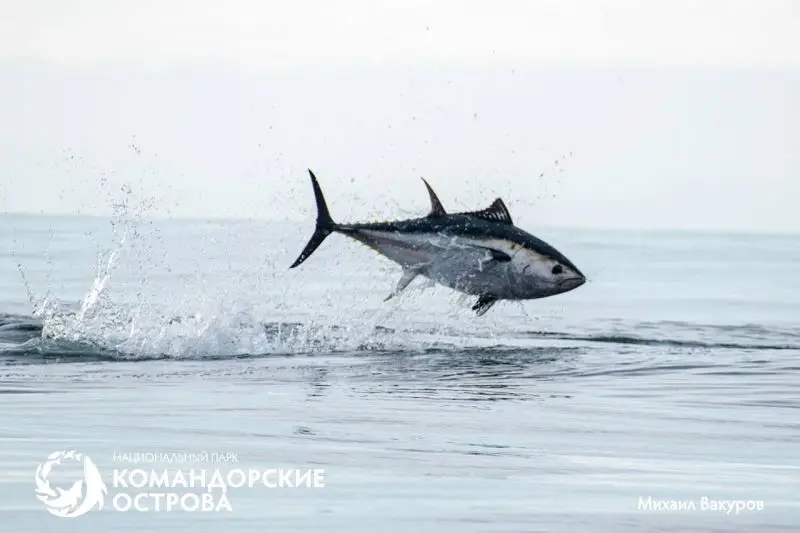
In August, a mass appearance of Pacific bluefin tuna was recorded in the waters of Bering Island within the Commander Archipelago. This event marks the first historically documented presence of the species in this region. Large schools – comprising hundreds of predatory fish – were photographed hunting saury near the surface, exhibiting characteristic breaching behavior.
Climate change is the primary driver behind this migration to the Commander Islands. Surface water temperatures in the northwestern Pacific Ocean currently exceed long-term averages by 1.5–2.5°C. Anomalous temperatures reaching 12.5°C were recorded near the archipelago, creating a warming trend that enables southern fish species to expand their range significantly northward.
The arrival of a massive pelagic predator in an ecosystem where local species historically possess few natural enemies poses a significant ecological risk. This shift threatens to disrupt local populations of marine fish, seabirds, salmon, and marine mammals. The evolving environmental conditions and the immediate impact of the tuna migration require continuous monitoring to assess potential long-term consequences for the regional marine habitat.