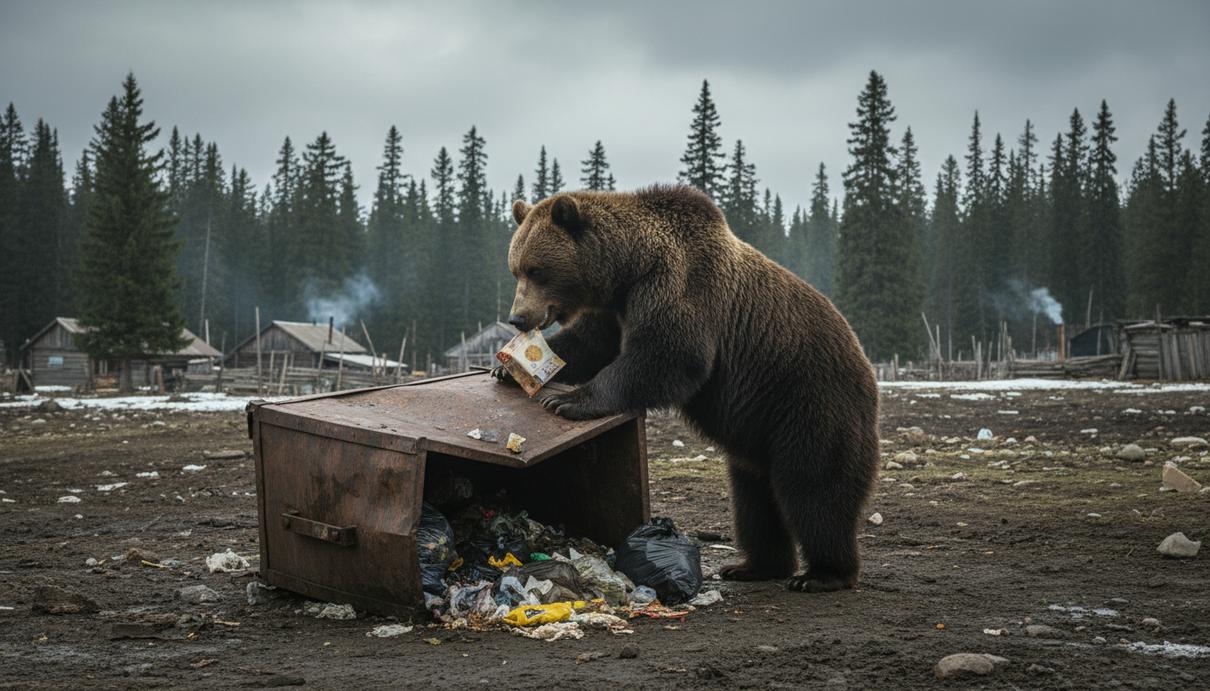
The economic and social consequences of wild animals entering human settlements have resulted in multi-million ruble losses for the state, local businesses, and residents in the Kamchatka and Sakhalin regions. The primary causes of these incursions are the intentional feeding of wildlife and the presence of unauthorized food waste dumps.
Conflict situations typically arise when bears become accustomed to easily accessible food sources. Animals that discover open garbage containers or fish processing waste lose their natural fear of humans. These individuals regularly return to highways and residential areas, a behavioral shift that almost always ends in their culling. In 2024, 428 bears were forcibly eliminated in the Kamchatka Territory alone – a figure comparable to the region’s legal hunting quota. In the Sakhalin Region, the number of culled bears increased from 43 to 69 within a single year.
Responding to the presence of predators requires substantial municipal and regional budget expenditures. Each deployment of a task force consisting of wildlife managers, inspectors, and emergency personnel costs between 27,000 and 35,000 rubles, with expenses rising to 80,000 rubles during extended search operations. With 244 recorded bear appearances in Sakhalin, the total response cost for regional agencies approached 10 million rubles. The disposal of animal carcasses places an additional financial burden on municipal administrations, costing approximately 20,000 rubles per animal without any dedicated state funding provided for the procedure.
The presence of predators causes direct financial damage to local businesses, particularly in the tourism and agricultural sectors. The cancellation of a single excursion day due to the risk of wildlife encounters deprives tour operators of 160,000 to 420,000 rubles in revenue. In the event of an attack on humans, business owners face severe legal liabilities. A precedent in the South Kamchatka Nature Park resulted in a hike organizer paying over one million rubles in compensation and receiving a ban on professional activities. Agricultural enterprises experience similar financial strain, with 111 recorded bear attacks on livestock in Kamchatka over the past year. Given the market value of approximately 180,000 rubles per cow, cumulative losses for farming operations amount to millions of rubles.
The forced proximity to bears also impacts the daily expenses of the local population. Residents of villages with regular predator sightings alter their daily routines, abandoning walking in favor of personal vehicles. The associated costs for fuel, vehicle depreciation, and lost working time range from 40,000 to 50,000 rubles per person each season. Establishing safe infrastructure – including the installation of secured garbage bins, timely waste removal, and strict enforcement of bans on feeding wild animals – remains the only economically viable method to mitigate the financial and environmental losses experienced by these regions.