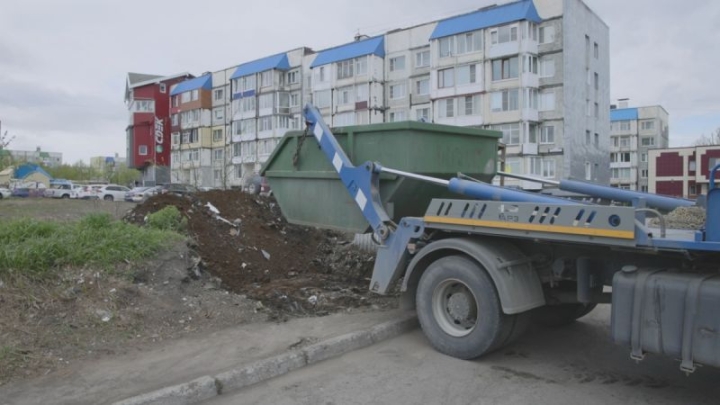
Petropavlovsk-Kamchatsky, a principal city in Russia’s scenic Far East, is initiating an innovative pilot program to address its persistent problem of illegal large-sized waste dumps. JSC “Spectrans,” the regional operator responsible for solid communal waste management, has launched an experiment involving specialized containers designed to offer a more structured and accessible disposal method for bulky items, aiming to significantly reduce widespread environmental clutter and improve urban aesthetics.
This recurring environmental challenge is largely attributed to residents, particularly those who own dacha properties or country houses, bringing their waste back into the city rather than arranging for proper disposal at designated sites. This practice frequently results in unauthorized communal waste collection areas becoming overwhelmed with oversized refuse, such as old furniture, construction materials, and household appliances, creating unsightly and unsanitary conditions across various urban districts. Authorities have acknowledged that this issue resurfaces annually, underscoring the need for a more proactive and user-friendly approach from waste management services.
In response to this ongoing issue, Spectrans has strategically installed new “boat-shaped” bunkers – specialized open-top containers – at two critical locations within the city: Frolva Street, 2, and Chubarova Street, 5/1. These unique containers are specifically engineered to accommodate large-sized waste, providing convenient and dedicated drop-off points for items that are too big for standard municipal bins. The initiative is currently under close observation by specialists who will meticulously track the rate at which these new receptacles fill, assessing their overall effectiveness and public adoption.
Should this experimental phase successfully demonstrate its capability to reduce the incidence of illegal dumping and efficiently manage large-sized waste, the program is slated for expansion to other districts within Petropavlovsk-Kamchatsky. This localized endeavor, as reported by Kamchatka.Today citing the regional Ministry of Natural Resources and Ecology, could potentially serve as a valuable model for other cities globally grappling with similar urban environmental concerns, illustrating how tailored infrastructure and community-focused initiatives can foster cleaner, more sustainable urban environments.