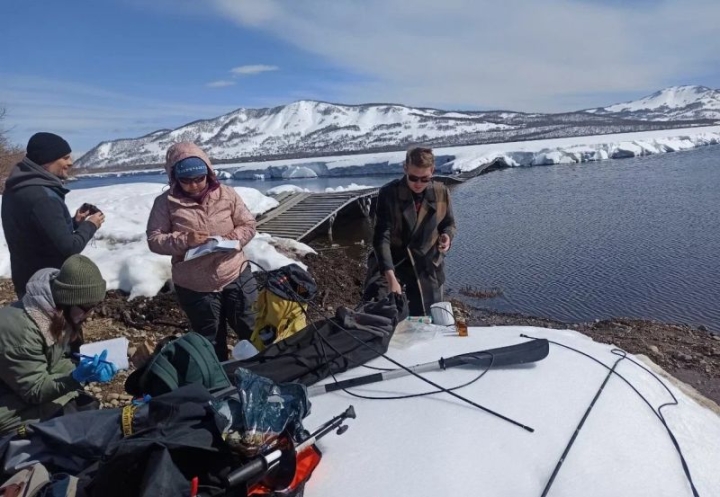
Kamchatka, a region globally renowned for its dramatic volcanic landscapes and pristine wilderness, is now positioning itself as a potential new frontier in international wellness tourism. Recent comprehensive scientific investigations conducted by experts and students from the Vitus Bering Kamchatka State University are uncovering the untapped potential of Utinoye Lake, located near the Lower Paratunka thermal springs, to become a year-round balneological resort leveraging the region’s rich geothermal resources and therapeutic muds.
The research team embarked on an intensive study, employing advanced techniques to map the lake’s hidden features. This included a detailed bathymetric survey, precisely measuring depths and charting the intricate topography of the lakebed. Furthermore, water samples were meticulously collected for hydrochemical analysis, while the thermal regime of the water body was thoroughly investigated, with temperature fluctuations meticulously recorded across various points, directly correlating with the proximity of natural thermal sources. These investigations aim to unravel the complex interplay of natural forces beneath the surface.
According to Stanislav Rogatykh, expedition leader and associate professor at the university’s Department of Biology and Earth Sciences, Utinoye Lake has historically remained an uncharted territory on the scientific map of the region. “There was a complete absence of systematic data – be it hydrological, geological, or biological,” Rogatykh explained. “Our primary objective was to definitively ascertain the precise connections between the lake, underlying groundwater systems, and the renowned thermal springs, and to evaluate the resilience of this intricate system for potential development.”
This research holds practical significance far beyond academic exploration. The Paratunka Valley stands out as one of Russia’s few regions where therapeutic thermal waters naturally emerge to the surface in close proximity to well-developed transport infrastructure and established settlements. This unique convergence of natural assets and accessibility presents a compelling case for strategic development and potential international collaboration.
Currently, the area primarily serves as a local recreational hub, drawing visitors to its open thermal pools. However, the comprehensive scientific endeavors suggest a significantly broader scope for the territory. The findings could pave the way for transforming this local attraction into a destination with international appeal, attracting a global clientele seeking health and wellness retreats.
Should the ongoing studies conclusively confirm a stable and sustainable hydrological link between Utinoye Lake and the underlying thermal springs, it would establish a robust scientific foundation for the development of a fully-fledged balneological resort. Such a development would not only bolster Kamchatka’s tourism sector but also align with Russia’s broader economic diversification efforts in the Far East, potentially attracting significant international investment and positioning the region prominently on the global map of health and spa tourism destinations.