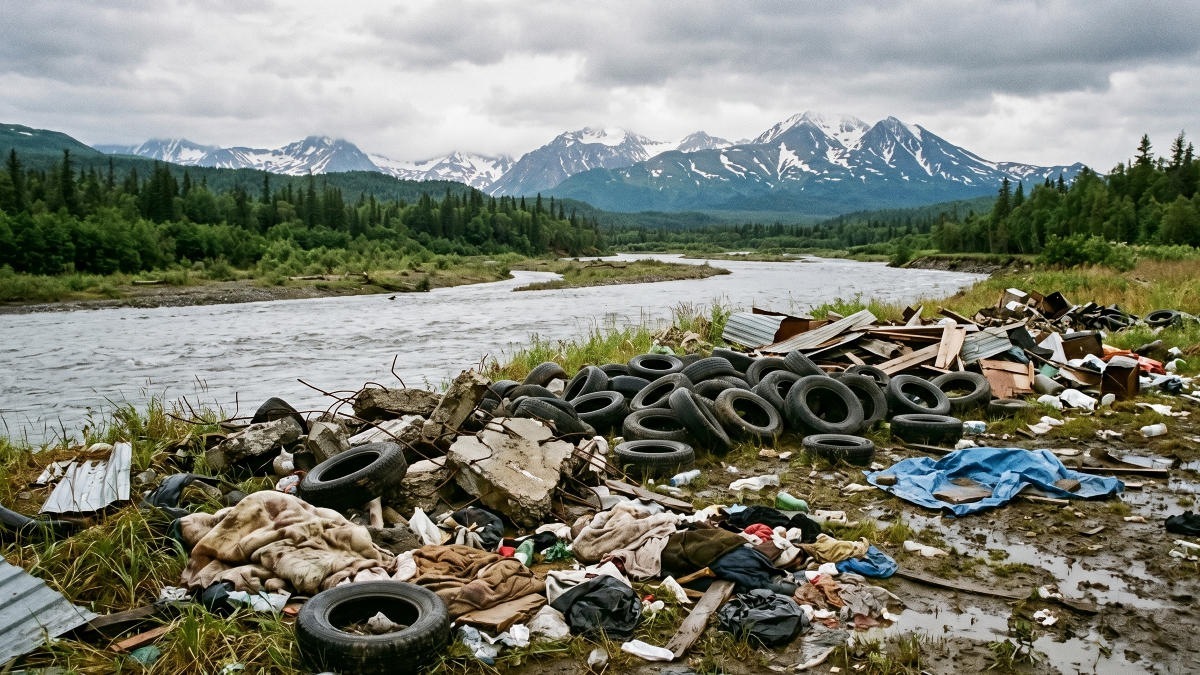
A federal environmental oversight body in Russia has successfully secured a significant fine against a penal colony in the ecologically sensitive Kamchatka region for its role in creating a large-scale illegal landfill. The Federal Service for Supervision of Natural Resources (Rosprirodnadzor) obtained a ruling from an arbitration court, compelling Penal Colony No. 6 to pay 1.3 million rubles (approximately $14,000 USD) for the environmental violation, which occurred within the vital water protection zone of an Avacha River tributary.
The unsanctioned dump, sprawling over an area exceeding 1,300 square meters, was discovered by Rosprirodnadzor inspectors during a routine site visit in the spring of 2024. Along the river’s edge, authorities documented a substantial accumulation of both construction and household waste. The refuse included discarded automobile tires, fragments of roofing felt, concrete debris, glass wool, food scraps, and old blankets, pointing to a sustained disregard for proper waste disposal protocols by the institution.
During the legal proceedings, representatives for Penal Colony No. 6 attempted to deflect responsibility, claiming the landfill was not their doing and that all waste had been cleared before the case was heard. However, the court firmly rejected these assertions. In its detailed judgment, the court underscored that the land user holds direct and unequivocal responsibility for the preservation and ecological integrity of the territory under its indefinite use, and that subsequent cleanup efforts do not absolve it of the primary harm already inflicted upon the local ecosystem.
Despite the court’s clear ruling, the fine remains outstanding. Penal Colony No. 6 has since filed an appeal to a higher judicial authority, indicating a continued legal challenge over accountability. This case highlights the ongoing commitment by Russian authorities to enforce environmental regulations, even against state-controlled institutions, and serves as a crucial reminder of the importance of ecological stewardship, particularly in pristine and globally recognized natural heritage areas like Kamchatka.