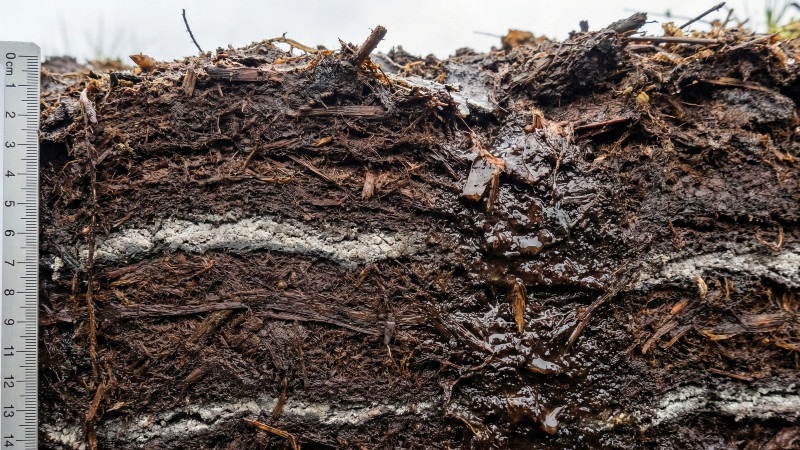
In a groundbreaking study with significant global implications, Russian scientists have meticulously reconstructed five millennia of vegetation change across northeastern Kamchatka. By analyzing ancient pollen locked within peat bogs and layers of volcanic ash, researchers have unveiled how flora, landscapes, and climate have transformed over time in this unique, volcanically active region. The insights gleaned from this historical deep dive are not only poised to refine future climate change predictions amidst escalating global warming and anthropogenic pressures but also offer a tantalizing prospect for cultivating agricultural crops resilient to extreme environmental conditions, as reported by Izvestia.
Unlocking the secrets of past environmental shifts relies heavily on deciphering natural archives. Peat bogs and lake sediments serve as invaluable repositories, steadily accumulating pollen from the air that mirrors the plant communities of surrounding areas across different epochs. Experts from Lomonosov Moscow State University and the Geological Institute of the Russian Academy of Sciences pioneered novel approaches for reconstructing regional flora dynamics, employing sophisticated pollen and botanical analyses of peat, underpinned by an advanced sedimentation modeling system.
Intriguingly, the peat layers in Kamchatka are frequently interspersed with volcanic ash, or tephra, remnants of dramatic eruptions that settled on the bog surface and were subsequently preserved. While these ashfalls appear visually dramatic, the scientific investigation yielded a surprising conclusion: they did not trigger fundamental overhauls of the regional vegetation over the past five thousand years. Valery Pimenov, a researcher at Moscow State University’s Biological Faculty, highlighted that this exceptionally detailed chronicle, offering insights every 60 years, allowed scientists to definitively distinguish the effects of volcanic eruptions from background climatic fluctuations.
Instead, the research firmly established climate as the decisive force shaping Kamchatka’s plant cover. During colder epochs, hardy alder dwarf shrub communities thrived, adapted to harsh conditions. Conversely, warmer periods witnessed an expansion of birch forests. These observed shifts in pollen spectra align consistently with well-documented climate cycles characteristic of the Northern Hemisphere. Statistical analysis further bolstered this finding, confirming that key ecological changes were primarily driven by natural successions of biological communities and hydrological conditions, with tephra deposits playing only a secondary role.
Professor Yuri Mazei, the project leader, emphasized that this comprehensive study represents merely the initial phase of a more extensive evaluation of the peninsula’s critical wetland ecosystems. The collection of comparable data from diverse regions across Kamchatka will be crucial for validating the universality of these newly identified patterns. This interdisciplinary methodology promises a detailed understanding of the intricate ‘vegetation – climate – geology’ interplay, a prerequisite for constructing robust predictive models vital for future environmental stewardship and international policy-making regarding climate change adaptation.
Experts surveyed underscore Kamchatka’s distinctive nature, characterized by its active volcanism, which introduces a unique variable to its environmental conditions. While localized eruptions, as noted by Anna Grenaderova of Siberian Federal University, cannot be equated with global catastrophes that induce planetary cooling, they undeniably influence soil and hydrological conditions. However, Denis Rogozin, a leading researcher at the Institute of Biophysics of the Russian Academy of Sciences, pointed out that traditional scientific use of volcanic ash is often limited to dating events. This research, however, demonstrates that even powerful eruptions do not cause substantial shifts in the species composition of terrestrial vegetation.
Building upon the deep understanding of paleogenetic data, there emerges a profound potential for developing new plant varieties engineered for resilience against extreme environmental stressors. Tatyana Ledashcheva, an associate professor at RUDN University’s Institute of Ecology, elucidated that scientists are meticulously decoding ancient DNA and comparing it with the genomes of modern species. Identifying key genetic sequences responsible for drought or cold tolerance could pave the way for targeted breeding or advanced genetic editing. However, she cautioned that this remains a complex, multi-stage endeavor, facing challenges such as the degradation of genetic material in ancient samples and navigating significant ethical and legislative frameworks surrounding gene-editing technologies, issues that resonate globally in scientific and policy arenas.
Indeed, specialists worldwide caution about the imperative to consider these ethical and legal barriers when deploying gene-editing techniques. Vladimir Pinaev, a member of the public council of the CIS Basic Organization for Environmental Education, encapsulated the essence of the findings: academic curiosity about the distant past provides an indispensable foundation for comprehending the present. This research fundamentally shifts priorities for predictive models in volcanic regions, advocating a focus on climate scenarios rather than solely on volcanic risks. The findings were officially published in the esteemed scientific journal, Palaeogeography, Palaeoclimatology, Palaeoecology.