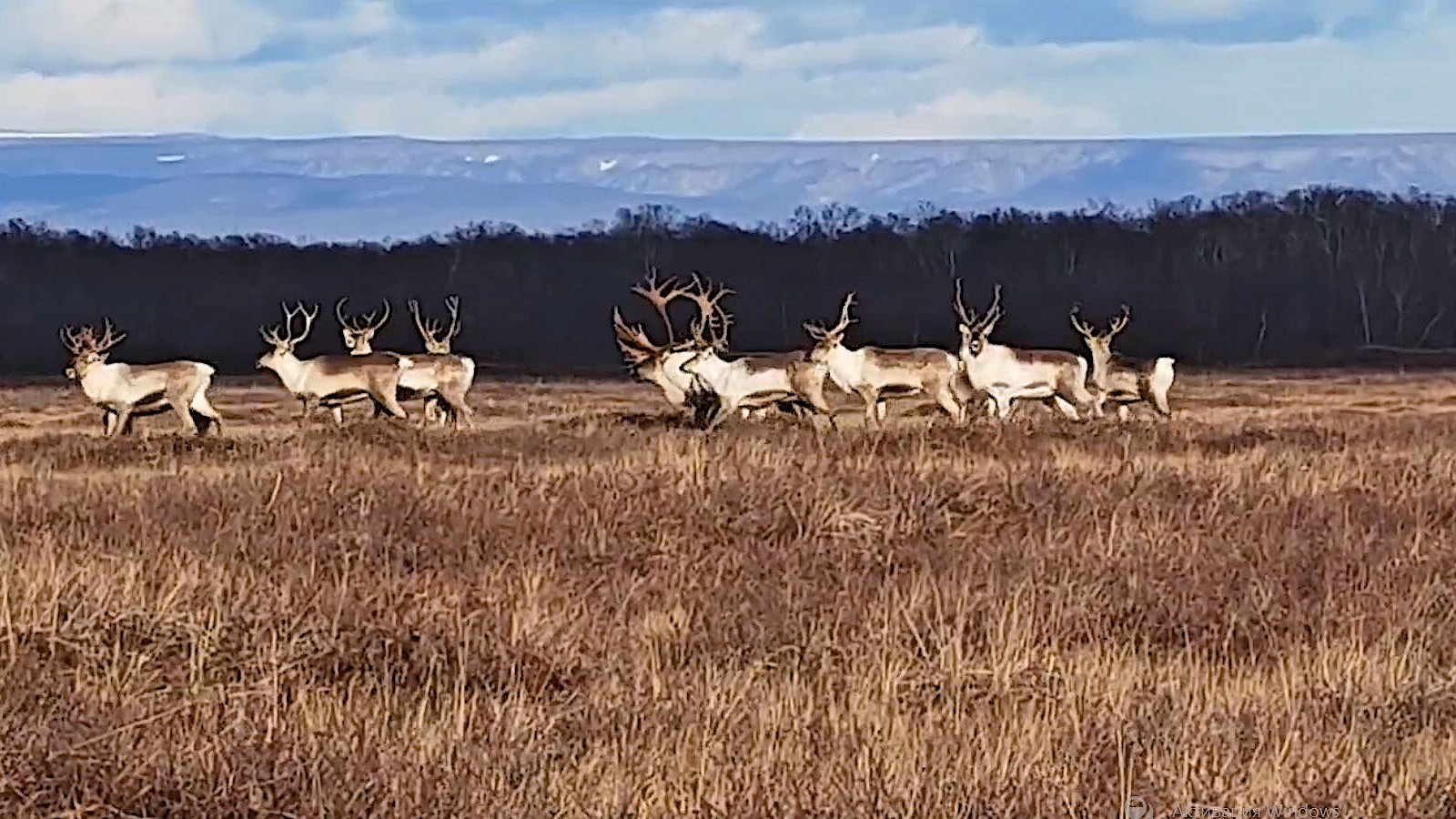
State inspectors have recorded a group of at least 40 wild reindeer in the Kronotsky-Bogachevsky tundra. The regularly monitored herd includes adult males, females, and young offspring. This Kamchatka population is listed in the Red Data Book of the Russian Federation and remains the only large herd of wild ungulates surviving on the peninsula.
A shift in the biological rhythms of the animals is currently underway. Although the mating season is nearing its end, many adult males have not yet shed their antlers. This anomaly is linked to the previous heavy winter snowfall, which caused a delay in the rutting period. Dense snow cover in the coastal tundra forced the reindeer to remain on their mountain winter pastures longer than usual. In these high-altitude areas, strong winds create extensive snow-free patches, allowing the animals to feed on reindeer moss and dry grass. The descent of the herd from the mountains to the plains was only completed in May.
The antler shedding cycle in reindeer varies by sex and serves as a survival mechanism in the harsh conditions of the Kamchatka foothills. Males require large antlers to compete for females during the autumn rut, after which they shed them to reduce physical exertion during the transition to winter feeding grounds. Females, conversely, retain their antlers until June. This adaptation allows pregnant individuals to drive antlerless males away from scarce food resources in the mountains and – during the summer period – to protect newborn calves from predators.
The isolation of Kamchatka wild reindeer makes them highly vulnerable to habitat alterations. The total population, which inhabits exclusively the territory of the Kronotsky Nature Reserve, is estimated at 800 individuals. To support and continuously monitor the population, a specialized conservation program has been implemented since 2024 with the participation of the Conservation of Ecological Systems of the Far East and Siberia charitable foundation.