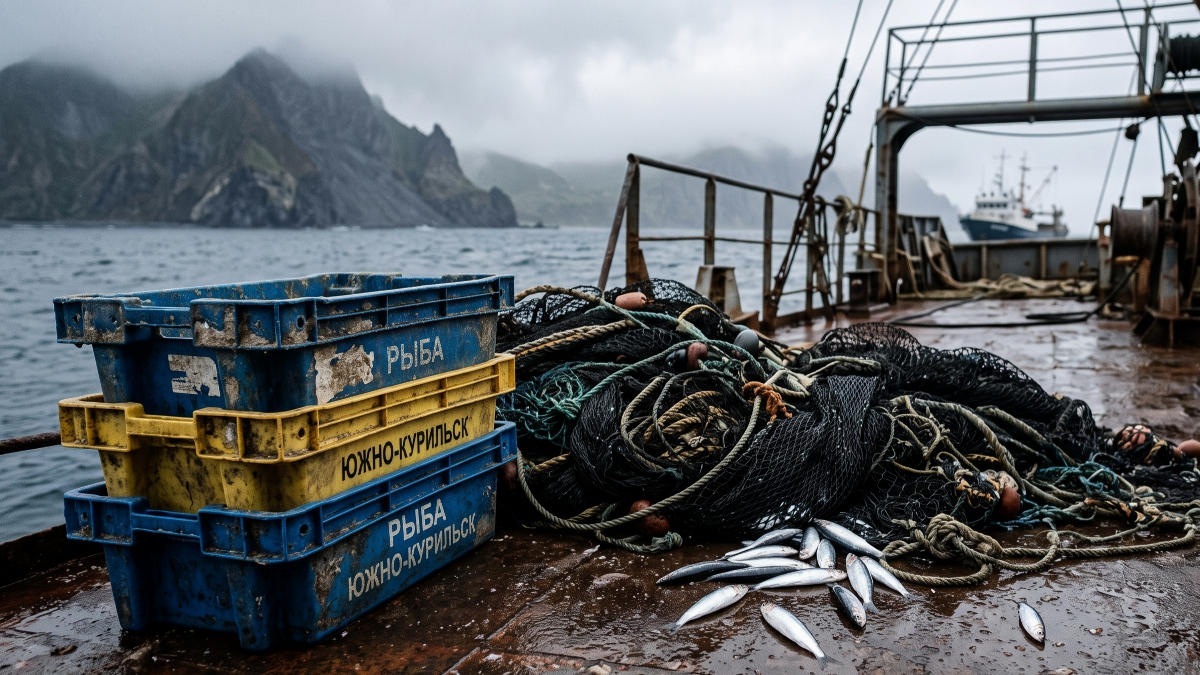
Warming waters in the Pacific Ocean are forcing commercial fish species to alter their natural habitats, directly impacting the economy of fishing enterprises in the Russian Far East. Pacific saury has abandoned the waters of the Southern Kuril Islands, migrating north toward the coasts of Kamchatka and the Northern Kurils. This route alteration is driven by rising ocean temperatures that have rendered the previous habitat unsuitable. In these new territories, saury no longer congregates in dense schools, leading to a sharp decline in catch volumes and leaving the dedicated fleet without a stable yield. Georgy Shevchenko, head of the oceanography laboratory at the Sakhalin branch of the Russian Federal Research Institute of Fisheries and Oceanography, outlined these climate-driven shifts during the Islands of Sustainable Development environmental forum.
The ecological niche vacated in the South Kuril zone is rapidly being occupied by the Far Eastern sardine. The regional ecosystem is undergoing noticeable transformations, with fishermen recording commercial volumes of anchovy off the coasts of Sakhalin and the Kuril Islands. Local businesses have not yet adapted to these shifts and currently show little interest in harvesting the newly arrived species. Simultaneously, abnormally warm currents are carrying tuna into Sakhalin waters – an atypical species for these latitudes that serves as a direct indicator of temperature anomalies.
Beyond the migration of commercial stocks, these climatic processes pose a significant threat to Pacific salmon populations. Changes in the hydrological regime create an optimal environment for the proliferation of marine parasites. International studies indicate a sharp increase in the infection rates of salmonid species by sea lice and other pathogens. Elevated water temperatures weaken the fish and facilitate the rapid spread of infections throughout the population.
Researchers have not yet established precise forecasts regarding the ultimate consequences of this structural shift in Far Eastern marine ecosystems. However, the fishing industry is already facing circumstances that necessitate an immediate revision of harvesting and processing strategies. Climate change has transitioned from a subject of scientific discourse into a tangible operational challenge for regional fishing companies.