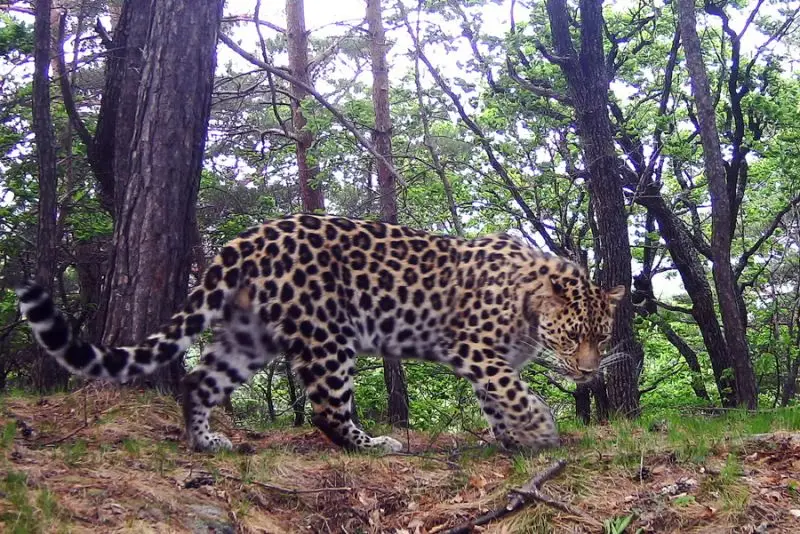
Russia and China have consolidated data on the Far Eastern leopard for the first time, revealing a sixfold increase in the population of the world’s rarest big cat over the past 20 years. Today, 223 individuals are registered across protected areas in both countries, compared to just 35 wild cats in the early 2000s.
Scientists from the Land of the Leopard National Park in Russia’s Primorye region and the Northeast China Tiger and Leopard National Park conducted the comprehensive assessment. They confirmed the presence of at least 223 adult and cub leopards within the protected reserve network. Of these, 135 reside in the Russian national park and 115 in the Chinese national park, with 27 identified as transboundary individuals recorded in both countries.
This joint research highlights the effectiveness of ongoing conservation efforts. A key indicator of the population’s health is the gender ratio, which leans toward females at 1.1 to 1, demonstrating demographic stability. The recovery of this apex predator also signals a balanced local ecosystem characterized by a robust prey base, unpolluted rivers, and healthy forests free from severe wildfires.
The population growth stems from decades of coordinated work involving scientific research, anti-poaching measures, fire prevention, and prey population restoration. Enhanced technical equipment and an expanded network of camera traps, supported by corporate partners such as VTB Bank, have made monitoring systematic and precise. Since 2023, VTB has backed the national park by funding infrastructure upgrades, scientific research, and sustainable ecotourism development, in addition to sponsoring a specific leopard family comprising a mother named Gerda and her three cubs – Phoenix, Sierra, and Fusion.
To further promote the recovery of endangered species, a dedicated public awareness campaign titled Time to Be Noticed was launched in the fall of 2025 to highlight Far Eastern leopard conservation. The establishment of the Land of the Leopard National Park and its collaborative initiatives continue to prevent the extinction of the predator while ensuring the ecological stability of the broader region.