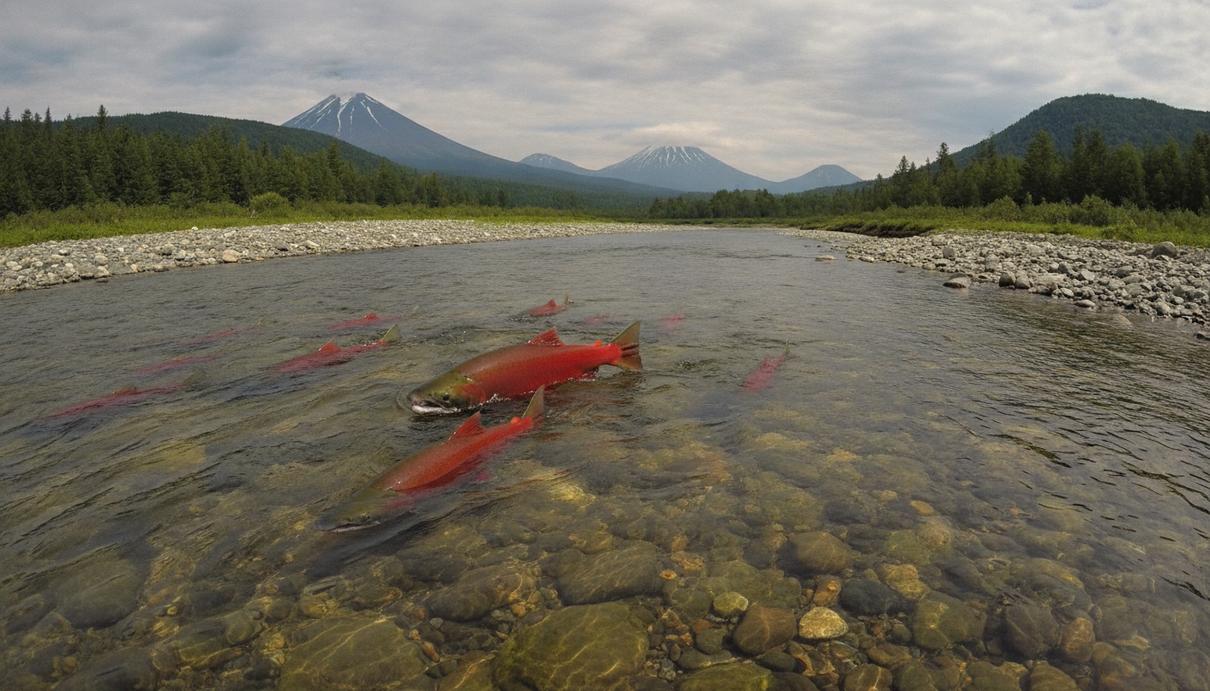
Kamchatka, Russia’s resource-rich Far Eastern peninsula often dubbed the “land of volcanoes and salmon,” is witnessing a challenging start to its crucial annual sockeye salmon fishing season. Industry reports indicate significantly lower catch rates in the Ust-Kamchatsk district compared to previous years, raising concerns among stakeholders in what is a vital contributor to global salmon supplies.
By mid-June, the volume of sockeye salmon caught stood at approximately 1,000 tons, according to the Kamchatka Salmon Catchers Association. This figure marks a notable decline when juxtaposed with analogous periods in the past, including 2021, which saw catches around 1,200 tons by the same point, even though that season later recovered. Industry representatives attribute the current sluggish pace primarily to adverse water temperatures and persistently unfavorable weather conditions impacting fish migration and harvesting operations.
Despite the initial setbacks, a cautious optimism permeates the fishing community. Drawing parallels to the 2021 season, when early delays eventually gave way to stabilization and improved catches, local fishing enterprises are holding out hope for a significant uptick in fish migration during the latter half of June. This hope is bolstered by optimistic forecasts from scientific experts who had initially projected a favorable season for sockeye returns to Kamchatka’s rivers.
Crucially, amidst the commercial challenges, environmental indicators for the start of the fishing season remain positive. Ecologists report that over 45,000 mature sockeye spawners have successfully navigated their way to Lake Azabachye, a site renowned as one of Asia’s largest natural reproduction grounds for this prized salmon species. Ensuring the sufficient passage of fish to their spawning grounds is paramount for maintaining the long-term health and sustainability of the salmon population, thereby safeguarding the intricate ecosystem of the Kamchatka River basin.
The difficulties are not isolated to Ust-Kamchatsk. In the Karaginskaya subzone on Kamchatka’s eastern coast, where fishing commenced on June 15, ongoing severe storms have impeded the installation of crucial stationary fishing gear, further slowing down operations. Meanwhile, the primary fishing activities on the western coast of the peninsula are anticipated to begin in the second decade of July, suggesting a staggered and weather-dependent unfolding of the entire region’s salmon harvest. The global market will undoubtedly be watching Kamchatka’s progress closely.