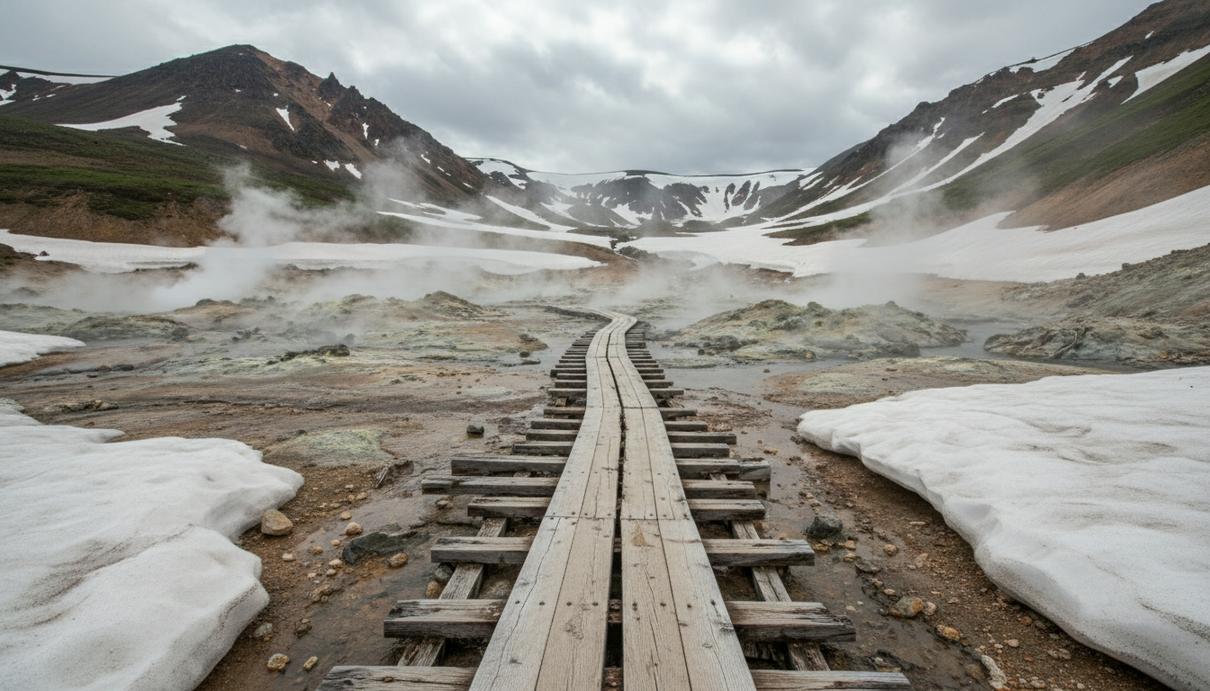
Kamchatka, Russia – The pristine and ecologically sensitive Valley of Geysers, a jewel within the Kronotsky Nature Reserve on Russia’s far eastern Kamchatka Peninsula, has sustained significant damage to its crucial visitor infrastructure following an exceptionally harsh winter. State inspectors, during routine snow clearance operations, discovered widespread destruction of wooden and metal boardwalk sections along prominent tourist routes.
This UNESCO World Heritage site, renowned for its unique geothermal landscapes and biodiversity, is now grappling with the aftermath of what specialists have preliminarily attributed to abnormally heavy and wet snow accumulation, posing a considerable challenge to its delicate ecosystem and visitor management.
The boardwalks within the reserve are more than just pathways for tourists; they serve an indispensable dual function. Crucially, they prevent visitors from treading on the extremely fragile thermal soil and inadvertently destroying rare plant species that thrive in this unique environment. With approximately 30% of the kilometer-long wooden pathways now cleared of snow, the extent of the wreckage is becoming clearer. As a direct consequence of the damage, current excursions are forced to operate on a linear path, deviating from the traditional, comprehensive circular routes that allow for a full immersion into the valley’s wonders.
The most severe structural failures have been identified at key viewing points, including the observation deck overlooking the iconic Bolshoy Geyser, as well as sections leading to the active Kovarny Geyser and the aptly named Hell’s Gate spring. Reserve administration officials caution that as the multi-meter-deep snowdrifts continue to melt over the coming weeks, further concealed defects and new areas of damage to the boardwalk system are likely to emerge, potentially escalating the scale of necessary repairs.
The arduous task of transporting essential construction materials, including timber boards, piles, logs, and handrails, to the remote ranger station is currently on hold. The region is experiencing a severe Okhotsk Sea cyclone, bringing torrential rains and gale-force winds, which has grounded all helicopter services to the Valley of Geysers. This aerial lifeline is vital for accessing the remote reserve, complicating the logistics of commencing urgent repair work.
Despite these significant obstacles, restoration efforts are slated to be conducted within an expedited timeframe. This ambitious schedule is greatly aided by the annual ‘Month of Silence,’ an ecological protection regime in effect until June 25th. During this critical period, helicopter excursions are intentionally limited to minimize disturbance to the local wildlife, particularly during the bear mating season and critical bird nesting periods. This enforced reduction in tourist traffic offers a timely window for repair crews to meticulously restore the pathways without causing undue stress to the reserve’s precious animal inhabitants, underscoring Russia’s commitment to preserving this unparalleled natural treasure for future generations.