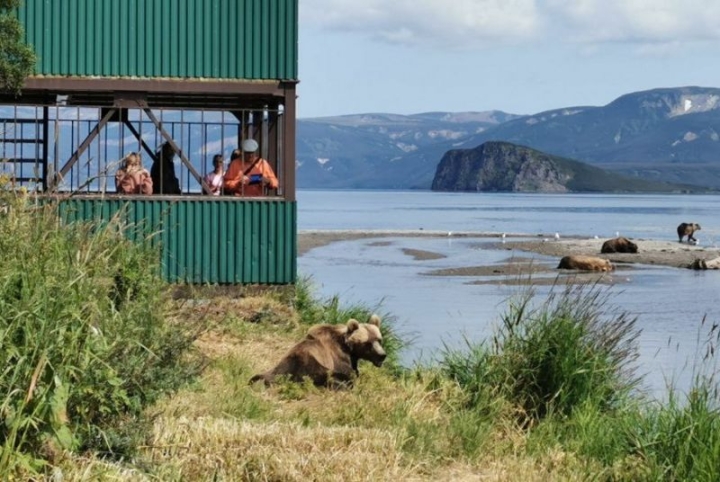
In a significant move towards sustainable development and community empowerment, stakeholders in Russia’s Kamchatka Peninsula are forging a collaborative path to expand eco-tourism. This initiative, unveiled during a crucial meeting in the Ozyornovsky settlement, aims to integrate local communities directly into the stewardship and economic opportunities offered by one of the world’s most breathtaking natural landscapes.
The discussions, led by staff from the revered Kronotsky Nature Reserve, focused on the development of eco-tourism within the South Kamchatka Sanctuary and its adjacent territories. A core objective is to harness the deep connection and intimate knowledge that residents of the Ozyornovsky cluster—encompassing Ozyornovsky, Shumny, Pauzhetka settlements, and Zaporozhye village—hold for their homeland. This involves creating employment pathways for them as expert guides, artisans crafting authentic local souvenirs, and contributors to ecological education, conservation science, and the provision of essential hospitality services.
Anna Narab, Deputy Director for Environmental Education at the Kronotsky Nature Reserve, highlighted the enthusiastic local engagement. “The meeting confirmed the keen interest of South Kamchatka residents in developing the region’s tourism potential,” Narab stated. “We explored prospects for new routes, employment for local guides and inspectors, and critical questions of preserving our unique nature amidst a growing influx of visitors, ensuring a delicate balance between progress and protection.”
Underpinning these efforts is the comprehensive “Ozyornovskaya Sockeye Salmon – for me, for you, for us” project. This multi-faceted program is actively implemented across the South Kamchatka Federal Sanctuary, its surrounding natural complexes – including vital riverine and marine areas – and the settlements of Ozyornovsky and Zaporozhye. It exemplifies a holistic approach to conservation and community development.
The project comprises three core pillars designed to foster sustainable co-existence: reinforcing protective measures for key sockeye salmon habitats, providing advanced training for state inspectors to enhance their capabilities, and significantly improving environmental literacy among local populations while actively engaging them in the burgeoning eco-tourism sector. This integrated model seeks to demonstrate how local engagement, informed conservation science, and carefully managed tourism can coalesce to protect invaluable natural heritage while providing sustainable livelihoods for generations to come.