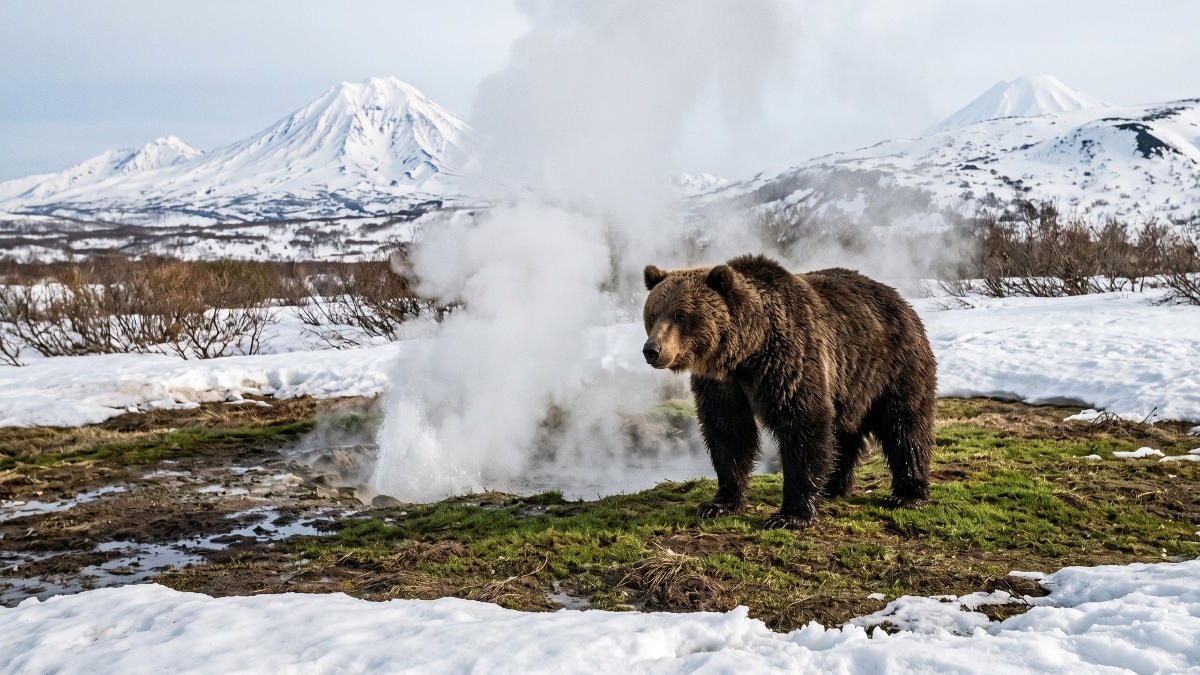
The remote and geothermally active Kronotsky Nature Reserve in Russia’s Kamchatka Peninsula has initiated its annual “Month of Silence” this May 25th, a critical period during which tourist activities, particularly helicopter flights over the Uzon-Geyser area, are drastically curtailed until June 25th. This strategic conservation measure underscores a commitment to protecting the region’s iconic wildlife from undue stress during their sensitive breeding season, highlighting a delicate balance between showcasing natural wonders and preserving them.
The primary impetus behind this temporary isolation of the Geyser Valley is the mating season of the Kamchatka brown bears. As these formidable predators emerge from their winter dens, they converge around the thermal springs, which offer a unique life-sustaining environment. While mountain slopes remain blanketed in snow, the steaming valleys provide the first flush of green vegetation essential for the bears to replenish their vitamin balance post-hibernation. It is within these localized, verdant oases near the mud pots that bears find crucial sustenance and form pairs, making the area a vital nexus for their reproductive cycle.
The incessant drone of helicopter rotors and the regular presence of tourist groups pose a significant threat to these natural rhythms. Such disturbances can induce heightened anxiety in the bear population, potentially leading to a reluctance to breed during the current season. To proactively avert any decline in their numbers, the reserve administration has adopted a meticulous, manual approach to managing tourist traffic. Permissions for each individual flight group are now granted on a daily basis, contingent on real-time assessments by specialists who monitor the proximity of bears to designated wooden boardwalks used by visitors.
Preparations for the summer season at the “Geyser Valley” cordon are already underway. During a recent technical reconnaissance flight, reserve personnel observed four brown bears actively foraging on fresh greenery near the hot springs, a clear indication of the area’s importance to wildlife even amidst surrounding snow, thereby validating the stringent protective measures being implemented.
Beyond the bears, flight restrictions also extend to safeguarding nesting bird populations. Early arrivals, such as wagtails, ingeniously construct their nests directly beneath the tourist boardwalks. These resilient avian species have adapted to leverage the region’s intense volcanic activity to their advantage: the subterranean heat acts as a natural incubator for their clutches. This geothermal warmth allows chicks in the Geyser Valley to hatch considerably earlier than their counterparts across other parts of Kamchatka. Consequently, any excessive noise or vibrational disturbances during this critical period could compel these birds to abandon their nests, disrupting another delicate ecosystem dependency.
This concerted effort by the Kronotsky Reserve exemplifies a global best practice in ecotourism and biodiversity conservation. By prioritizing the reproductive success of its unique fauna over unbridled visitor access, the reserve not only upholds its mandate to protect an irreplaceable natural heritage but also sets a precedent for thoughtful environmental stewardship on an international stage, ensuring the longevity of Kamchatka’s pristine wilderness for generations to come.