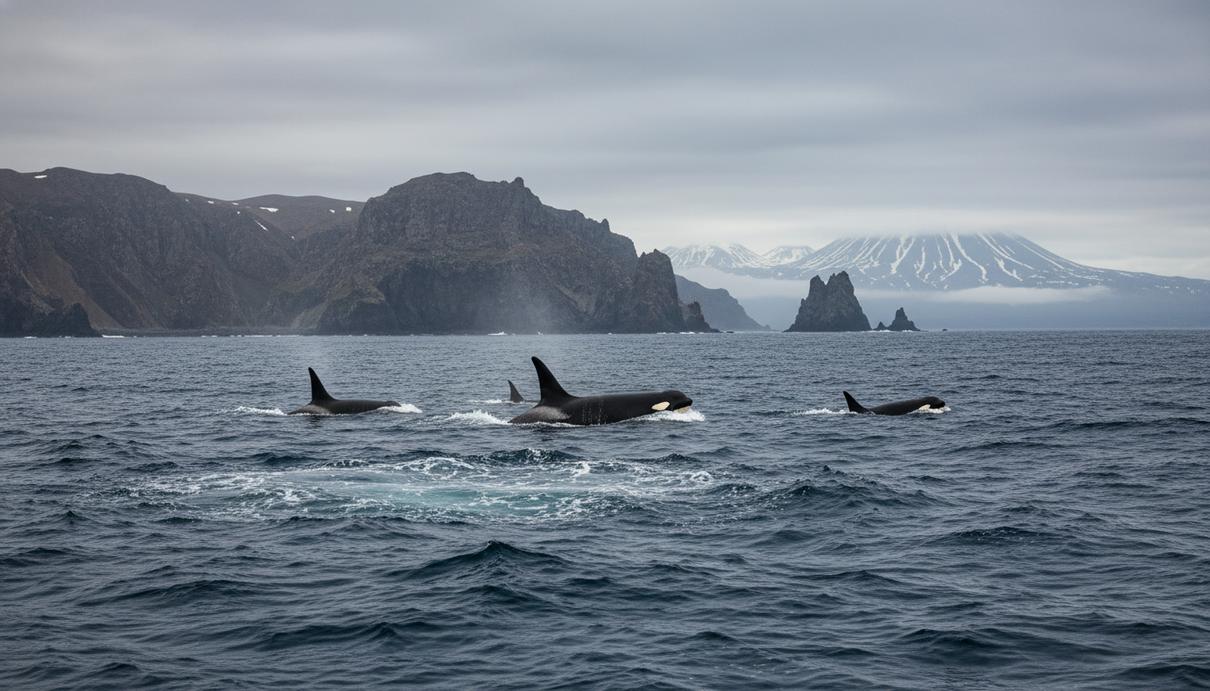
A groundbreaking initiative is nearing completion in Russia’s remote Kamchatka Peninsula, where biologists are finalizing the first comprehensive catalog of killer whales inhabiting Avacha Bay. This extensive database meticulously systematizes two decades of visual observations, offering unprecedented insights into the population dynamics of these majestic marine mammals and setting a new standard for conservation-driven tourism.
The primary objective of this ambitious project extends beyond pure scientific research. It aims to equip local vessel captains and tourist guides with vital information, enabling them to organize safe and environmentally responsible marine excursions that minimize disruption to the orcas. Such a practical application of long-term ecological monitoring is crucial for fostering sustainable interactions with wildlife in economically developing regions.
From over fifty distinct orca groups that periodically frequent Avacha Bay, researchers have meticulously identified and cataloged twenty-three resident families, which are observed with the highest regularity. This monumental work draws upon historical data from the ‘Ocean Economy’ project archives and numerous Far Eastern marine expeditions conducted between 2004 and the present day. During each field season, specialists capture up to two thousand high-resolution images, documenting the unique shapes of dorsal fins and individual pigmentation patterns that serve as ‘fingerprints’ for each animal.
Biologist Tatyana Ivkovich, who spearheads the arduous task of data processing, dedicated several months to painstakingly reconstruct the genealogies and intricate social structures of these apex predators. Her long-term monitoring efforts have revealed significant demographic shifts within various pods. A compelling example is the AV2 family, which, in 2005, consisted of eleven individuals but now numbers only five, illustrating a stark decline over the years.
Such population reductions directly influence the behavior and survival strategies of these highly social mammals. The loss of individual orcas can frequently lead to the dissolution of established family groups or, conversely, compel fragmented families to unite in a collective search for food resources. A profound understanding of these behavioral transformations is indispensable for an objective assessment of the health and resilience of the local marine ecosystem, offering valuable lessons for ocean conservation worldwide.
Currently, the scientific initiative is progressing through its graphic design and layout phase. The completed reference guide will first be disseminated to professionals within Kamchatka’s burgeoning tourism sector. By providing detailed knowledge of specific family structures, this resource will empower tour operators to adjust their routes and maintain appropriate distances, thereby significantly reducing stress levels for the animals. Looking ahead, there are plans to make a portion of the catalog available for public purchase, further engaging a broader audience in the plight and preservation of these iconic creatures.