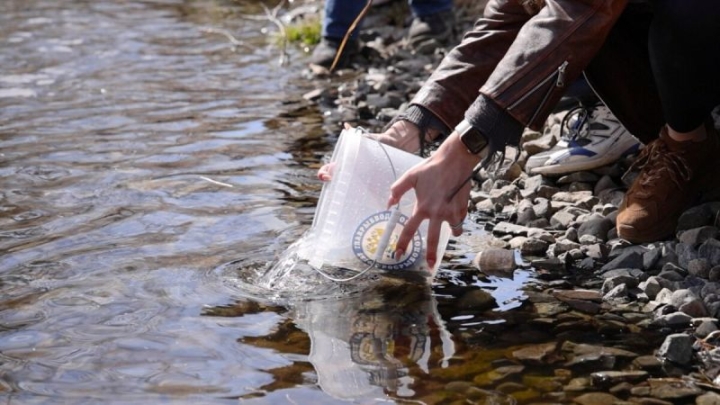
Kamchatka, Russia – In a proactive measure to bolster vulnerable marine life, the “Three Volcanoes Park” has released over 4,000 juvenile Chinook salmon, revered locally and internationally as the “King Salmon,” into the pristine rivers of the Kamchatka Peninsula. This significant initiative, part of a broader conservation strategy, aims to rejuvenate populations of a species critical to the region’s vibrant ecosystem and economy, according to reports from Kamchatka.Today, citing the regional government.
The company behind the “Three Volcanoes Park” tourist cluster financed the release of 4,280 fry of this valuable and increasingly threatened salmon species. Artificial reproduction, meticulously conducted using local genetic material, is considered a vital tool in supporting salmon populations. By nurturing these young fish in controlled environments before releasing them into their native river basins, conservationists hope to significantly increase the probability of their successful return to spawn as adults.
This ecological intervention aligns with the developmental ethos of the “Three Volcanoes Park” itself, which seeks to establish a tourist destination that harmonizes with nature rather than disrupting it. Igor Dunaev, CEO of the “Three Volcanoes Park,” emphasized this commitment, stating, “Our participation in the Chinook salmon conservation project is integral to the development logic of our tourist cluster. We are building a project that not only avoids disturbing the natural balance but actively coexists with it, supports it, and restores it. Such work becomes a part of the resort’s daily territorial management. It is crucial for us that local fish continue to enter the rivers to spawn, that animals maintain their migratory paths, and that Kamchatka’s natural ecosystems retain their capacity to thrive by their own natural laws.”
The undertaking is not an isolated event but a component of the “Three Volcanoes Park’s” systemic approach to environmental stewardship. This encompasses a comprehensive suite of measures, ranging from biodiversity conservation and rigorous ecological monitoring to fostering responsible attitudes towards nature among both tourists and local communities. This progressive model of environmental management is also applied at “Rosa Khutor,” another resort developed by Interros, underscoring a consistent corporate philosophy towards sustainable resource utilization.
The Chinook salmon, distinguished as the largest of the Pacific salmon species and capable of reaching weights of up to 60 kilograms, holds an unparalleled position in Kamchatka’s natural environment and economic landscape. However, biological experts have observed an alarming shift in recent years: the once-common large specimens have largely vanished, and predominantly younger fish are now returning to spawning grounds. Restoring both the numbers and the robust quality of the population demands a sustained, long-term effort, considering the species’ full lifecycle, which spans four to seven years.
Chinook salmon embark on a singular, epic migration back to their natal rivers to spawn, laying up to 14,000 eggs before perishing. Their bodies, rich in marine nutrients, then become a critical lifeline, enriching the waters and soils, and providing essential sustenance for over 130 species of animals and birds, including brown bears, Steller’s sea eagles, foxes, and otters. This unique life cycle underscores their foundational role in the Kamchatka food web.
The systemic decline of salmon populations in Kamchatka is a multifaceted problem, driven by a combination of overfishing, rampant poaching, and the pervasive effects of climate change, which impact both their food sources and survival rates. While industrial fishing of Kamchatka Chinook is already strictly regulated and significantly curtailed, these broader environmental and human-induced pressures continue to pose substantial threats to the species’ long-term viability.
The recent release of fry was conducted under the banner of the “Life for Kamchatka Salmon!” project, a collaborative endeavor implemented through the expertise of the federal “Glavrybvod” fish farming facilities. Such initiatives are seen as crucial steps in safeguarding Kamchatka’s irreplaceable natural heritage and setting a precedent for integrating ecological preservation with economic development on a global scale.