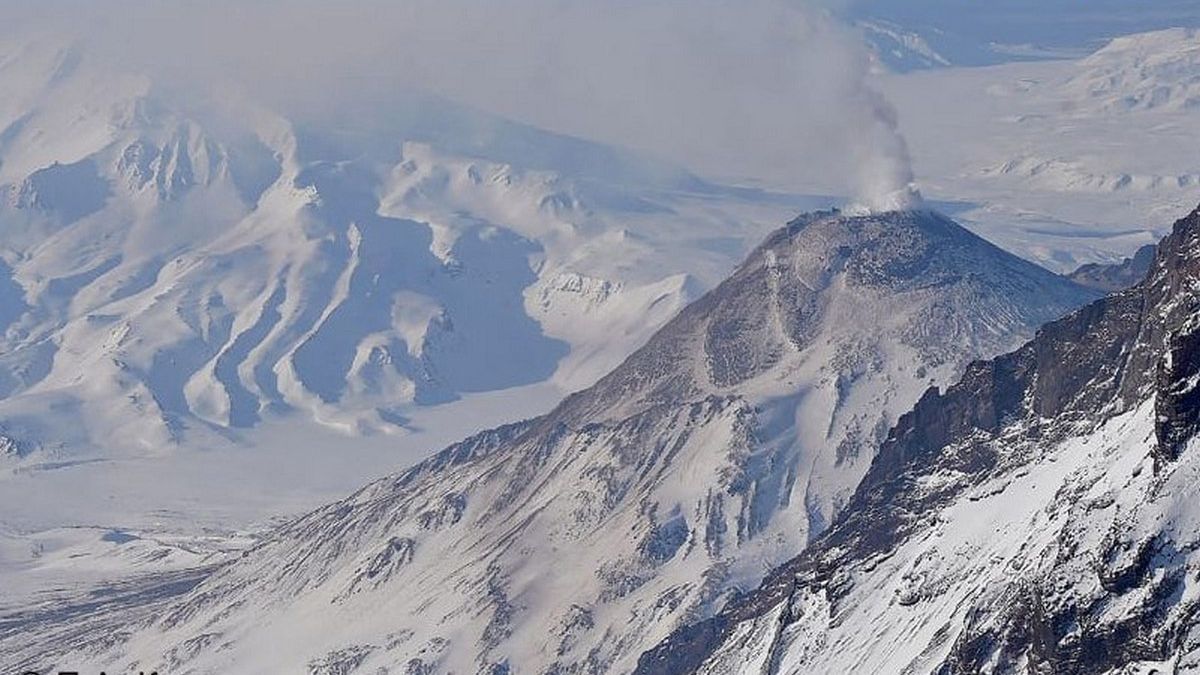
On Thursday morning, the Bezymianny volcano on Russia’s remote Kamchatka Peninsula erupted, spewing an ash column an impressive four kilometers (approximately 2.5 miles) above sea level. This significant activity immediately prompted regional emergency services to issue an “orange” aviation danger code, signaling a substantial threat to air traffic in the vicinity.
The “orange” alert indicates that fine, abrasive ash particles suspended in the atmosphere could pose serious hazards to aircraft engines, potentially leading to critical failures. Initial reports from the regional branch of EMERCOM (Russia’s Ministry of Emergency Situations) confirmed the ash plume is currently drifting southwest, directly impacting air routes and necessitating caution for any flights over the rugged peninsula.
The trajectory of the volcanic ash cloud is primarily affecting the Milkovsky district. Several settlements, including Atlach, Lazo, Tayozhnny, and the village of Dolinovka, lie within the predicted zone of ashfall. While experts anticipate only a minor accumulation of ash, typically insufficient to cause structural damage to infrastructure, local residents have been advised to observe basic safety precautions to mitigate health risks and protect property.
Kamchatka’s volatile weather patterns and shifting winds mean the ash plume’s direction could change unpredictably. Emergency services are monitoring the situation closely, acknowledging the possibility that volcanic dust may reach other populated areas, such as the Bystrinsky, Ust-Kamchatsky, and Tigilsky districts, if atmospheric conditions shift. Bezymianny, standing at 2,882 meters (9,455 feet), is recognized as one of the planet’s most active volcanoes.
Situated not far from the even more prominent Klyuchevskaya Sopka and approximately 40 kilometers from the settlement of Klyuchi, Bezymianny’s frequent eruptions are a characteristic feature of the Kamchatka Peninsula’s intense geological activity. Such events are a regular occurrence in this part of Russia, which lies within the seismically active Pacific Ring of Fire, underscoring the region’s dynamic natural environment.