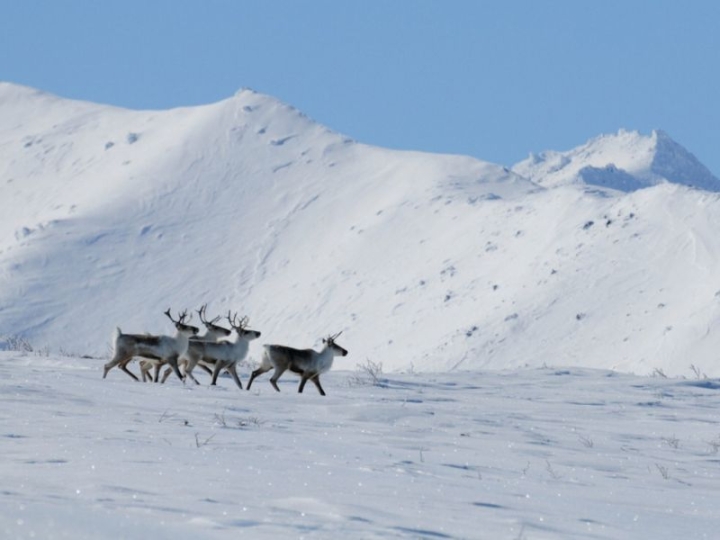
In a significant development for global wildlife conservation, specialists at Russia’s Kronotsky Nature Reserve in Kamchatka have deployed an advanced network of photo traps to monitor the delayed migration of wild reindeer. This initiative comes as unusually heavy winter snowfall has complicated the animals’ traditional journey to summer pastures, posing a critical challenge for a species already listed in the Russian Red Book of endangered animals.
The prolonged, snow-rich winter has compelled these iconic cervids to remain in the higher mountain elevations, far longer than their typical schedule. While the deep snow cover makes foraging in lower altitudes impossible, the reindeer are currently sustained by vegetation found in wind-swept, snow-free pockets within their mountainous refuge. Conservationists are emphasizing a crucial non-invasive approach, relying entirely on remote monitoring to observe the herds’ movements without causing any disturbance.
To ensure comprehensive coverage of this vital migration, photo traps have been strategically positioned across key habitats. These locations range from the rugged mountain foothills and dense forested zones to the Kronotsky Liman, a critical coastal lagoon. These cameras are poised to capture the first individuals making their descent, providing invaluable data on their migration patterns. The ultimate goal is to track their return to the Kronotsko-Bogachevskaya tundra, a crucial summer grazing ground where the herds will calve and remain until late autumn.
Historically, wild reindeer herds typically begin their journey from winter mountain pastures to the more temperate coastal tundra by the first decade of April. However, severe weather events, such as the one experienced this year, can significantly alter this natural rhythm. Records from the reserve highlight this variability, noting a significant delay in 1996 when the Kronotsko-Zhupanovsky herd’s migration was not recorded until May 9th. Such occurrences underscore the delicate balance between wildlife and the environment, emphasizing the growing importance of robust conservation strategies in an era of unpredictable climatic shifts.