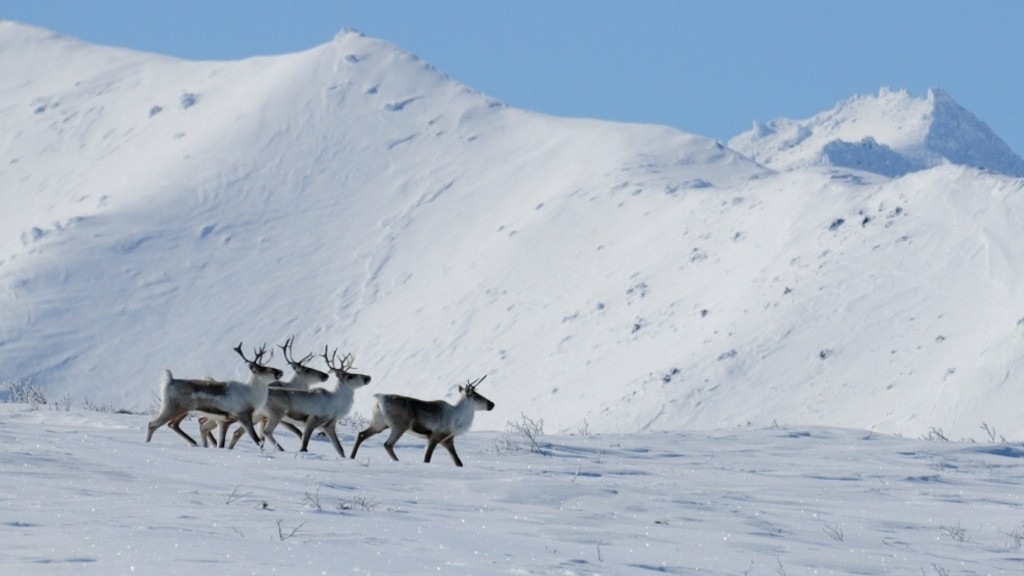
Heavy, unseasonable snowfalls across Russia’s remote Kamchatka Peninsula are profoundly impacting the vital seasonal migration of its endangered wild northern reindeer, a critical bellwether for the region’s delicate ecosystem. These majestic animals, listed in Russia’s Red Book of endangered species, find themselves unusually prolonged on their winter mountain pastures, unable to descend to their traditional spring feeding grounds due to deep snow accumulation in the lowlands. The situation highlights the increasing vulnerability of iconic species to erratic climate patterns, a concern resonating globally.
The reindeer’s current respite in the mountains is thanks to strong winds that sweep away snow, exposing vital lichens and other vegetation – their primary food sources. However, this delay in migration poses significant risks, particularly as the calving season approaches, typically occurring after their descent to coastal areas. The Kronotsky State Nature Reserve is home to the peninsula’s single remaining large herd of wild reindeer, numbering approximately 800 individuals. Their isolation makes this population acutely susceptible to environmental shifts and climatic volatility, underscoring the urgent need for robust conservation efforts.
Recognizing the severe threats, the Kronotsky Reserve, in collaboration with the “Preservation of Ecological Systems of the Far East and Siberia” foundation, initiated a targeted protection program for these rare animals earlier this year. Historically, the reindeer typically begin their descent to the milder coastal tundra in the first week of April. However, the exact timing is inextricably linked to snow depth on the summer pastures where they will subsequently calve and graze until late autumn. Scientific staff at the reserve note that migration delays are not unprecedented during years of abnormally high precipitation, with the most significant recorded delay for the Kronotsko-Zhupanovskaya group occurring in 1996, when the mass migration didn’t commence until May 9th.
In anticipation of this season’s potentially delayed migration, the reserve’s protection service has implemented proactive measures. To minimize stress on the animals ahead of the critical calving period, biologists have transitioned to remote observation methods. Makar Berdichevsky, a state inspector at the reserve, confirmed that dense snow cover persists in the Kronotsko-Bogachyovskaya tundra. To precisely track the herd’s movement and assess their physical condition following a protracted winter, camera traps have been strategically placed across key habitats, spanning from the foothills and forest zones to the Kronotsky Estuary. Data from these automated cameras will provide invaluable insights for ecologists to determine the exact migration timeline and gauge the herd’s overall health amidst these challenging environmental conditions.