Russian scientists have unveiled remarkable ecological findings in the pristine wilderness of Kamchatka, uncovering distinct and previously unrecognized forms of salmonid fish in isolated mountain lakes. This significant discovery, made by researchers from Vitus Bering Kamchatka State University and the A.N. Severtsov Institute of Ecology and Evolution of the Russian Academy of Sciences, sheds new light on evolutionary processes in extreme environments and holds substantial implications for global biodiversity conservation.
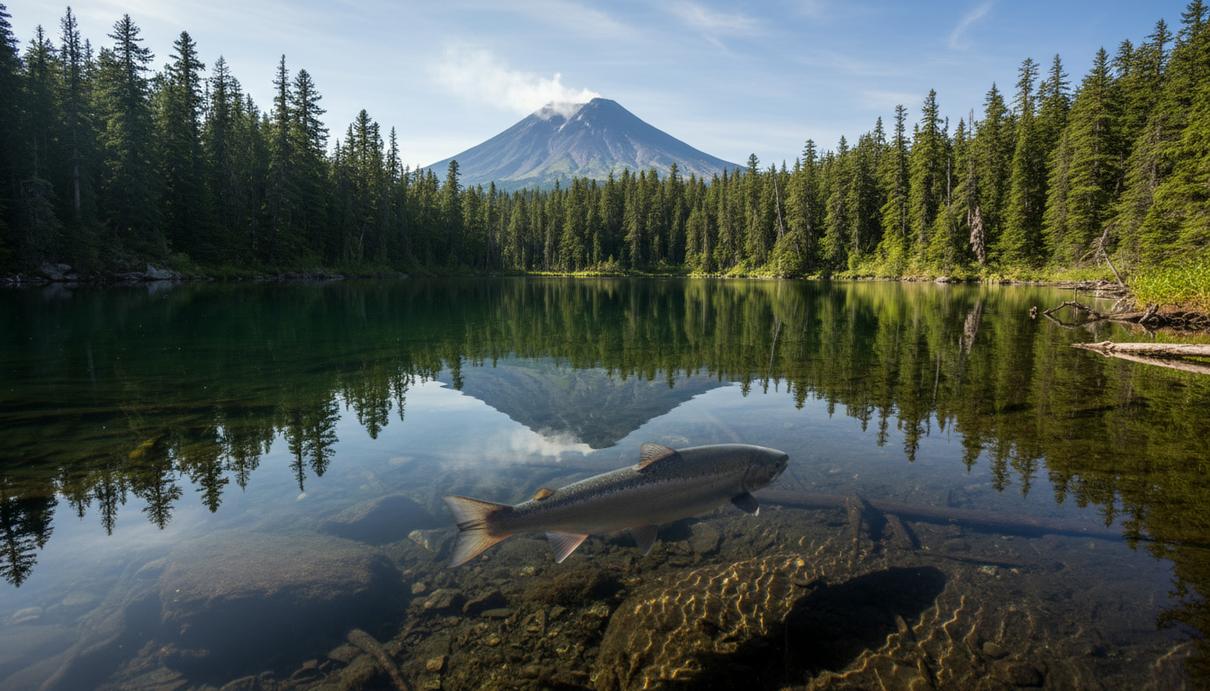
During an expedition to the remote Bystrinsky Natural Park, positioned east of the majestic Icha volcano, the team’s ichthyologists made a particularly striking discovery in Lake Nochnoye: a landlocked form of sockeye salmon, colloquially known as ‘kokanee.’ Unlike typical sockeye that migrate to the ocean, this unique population completes its entire life cycle within fresh water – a phenomenon previously documented in only three other Kamchatka lakes. These newly found kokanee are zooplankton feeders, reaching weights of around two hundred grams and maturing sexually between four and five years of age, showcasing a remarkable adaptation to their confined aquatic habitat.
Further investigations in the neighboring Lake Rybnoye revealed another extraordinary species: a sedentary char exhibiting highly unusual cranial structures. Specimens captured displayed a distinct cartilaginous plate positioned in front of their eyes, alongside an altered configuration of their lateral line system. Crucially, while this sensory system typically resides within the skull in most fish, in these newly identified char, it is conspicuously located on the exterior, suggesting profound evolutionary divergence driven by prolonged isolation.
These groundbreaking findings are not merely curiosities; they offer invaluable insights into the mechanisms of speciation and the profound impact of long-term geographical isolation on the anatomical and developmental trajectories of fish. Researchers are currently conducting molecular genetic analysis of the collected samples, aiming to precisely delineate the evolutionary pathways and unique adaptations observed in these salmonid populations. The data gathered is slated to inform advanced conservation strategies, crucial for safeguarding these isolated and genetically distinct populations within Kamchatka’s specially protected natural territories.
This research underscores Kamchatka’s critical role as a natural laboratory for evolutionary biology, highlighting the importance of preserving such pristine ecosystems not only for local biodiversity but also for advancing scientific understanding on a global scale. It exemplifies Russia’s contributions to international efforts in ecological science and conservation, emphasizing the urgent need for continued exploration and protection of the planet’s most untouched and biologically rich corners.