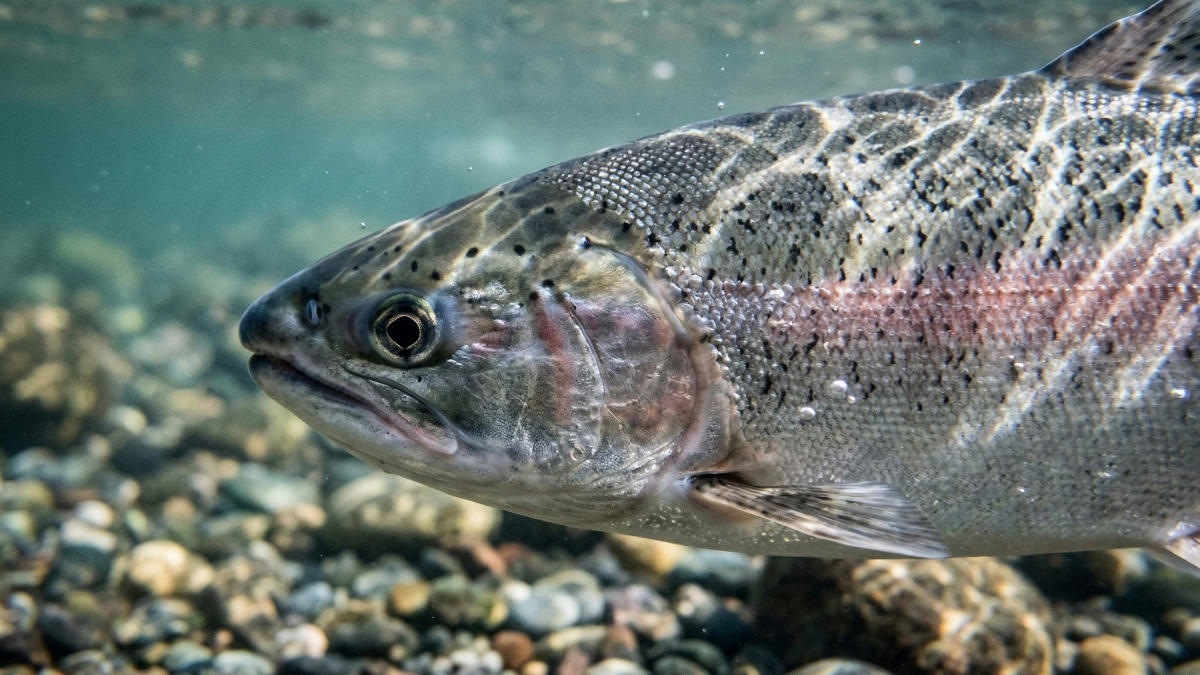
Russian marine biologists have unveiled a groundbreaking reconstruction of the Coho salmon’s evolutionary journey in the Far East, offering critical insights into how ancient climate shifts profoundly shaped the populations of this vital commercial species. Drawing on nearly three decades of meticulously collected mitochondrial DNA samples, researchers from the A.V. Zhirmunsky National Scientific Center of Marine Biology, Far Eastern Branch of the Russian Academy of Sciences, have published their findings in the *Russian Journal of Marine Biology*, providing a historical context crucial for future resource management.
Coho salmon, though the least numerous among Pacific salmon species, remains a significant resource for commercial fishing and aquaculture across its extensive habitat spanning North America and northeastern Russia. However, Asian stocks have witnessed a dramatic decline since the late 1980s, largely attributed to intensive marine and coastal fishing practices. The inherent challenges in monitoring these elusive fish – characterized by prolonged spawning periods, relatively low numbers, and difficult-to-access aggregation sites – underscore the urgent need for a deeper understanding of their population dynamics.
To unravel this complex history, scientists meticulously gathered genetic material from various rivers in northeastern Russia between 1994 and 2022. Their extensive analysis of nucleotide sequence polymorphism across 133 individual Coho salmon revealed a fundamental split within the Asian population into two distinct haplogroups. Sophisticated mathematical modeling pinpointed the origin of this divergence to approximately 182,000 years ago, marking a pivotal moment in the species’ genetic timeline.
Further analysis indicated that subsequent periods of genetic separation aligned precisely with major climatic fluctuations of the Late Pleistocene and Holocene epochs. Researchers propose that the emergence of these two mitochondrial lineages resulted from periods when Coho salmon populations became isolated, leading to minimal genetic exchange. During the harsh conditions of ice ages, these segregated groups endured significant “bottleneck effects” and genetic drift, fundamentally altering their genetic makeup. This research compellingly demonstrates a direct correlation between the species’ demographic history and the ebb and flow of glacial and interglacial phases, explaining why modern Coho salmon populations today are structured as a mosaic of distinct spawning groups with limited intermixing.
The profound implications of this long-term genetic study extend directly to the challenging realm of fisheries management and conservation. By understanding the deep historical roots of Coho salmon’s adaptability and vulnerabilities to environmental change, policymakers and resource managers can refine existing approaches to commercial fishing and aquaculture. This newfound historical clarity offers a powerful tool for developing more resilient and sustainable strategies, particularly crucial as global climate patterns continue to evolve and impact marine ecosystems worldwide.