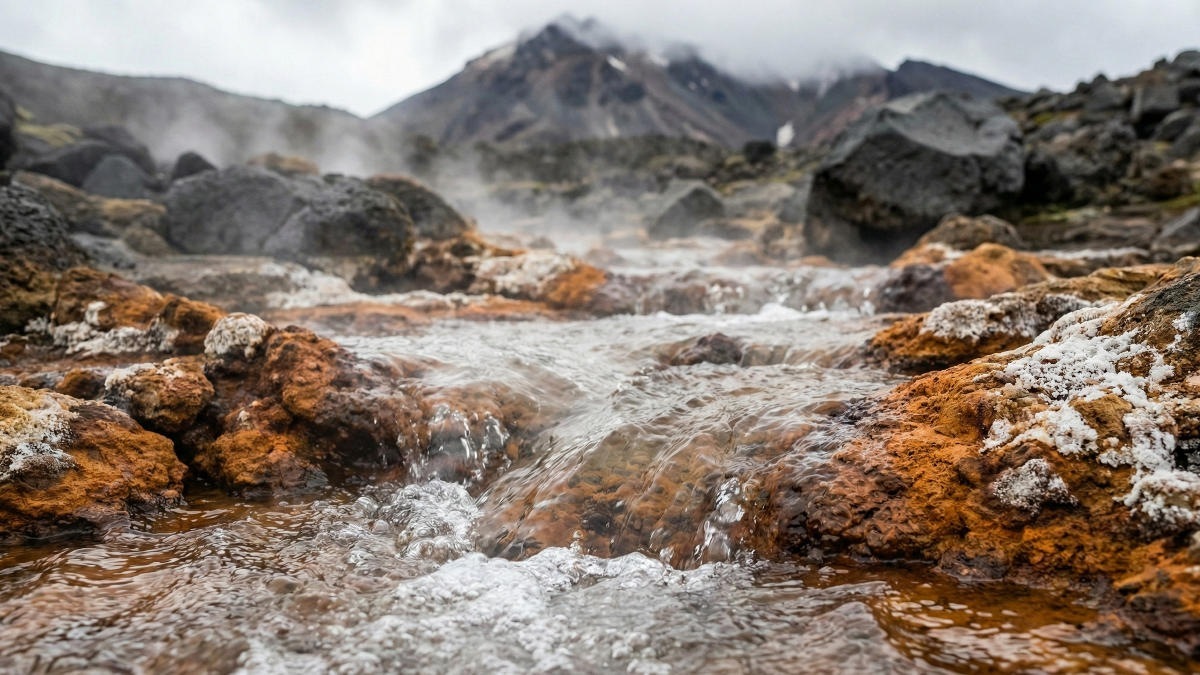
In a region renowned for its dramatic volcanic landscapes, Kamchatka, Russia, is now pioneering a new frontier in environmental science. Specialists from the Institute of Volcanology and Seismology of the Far Eastern Branch of the Russian Academy of Sciences have developed and launched an advanced Geographic Information System (GIS) aimed at rigorously monitoring the ecological health of the peninsula’s vital freshwater bodies. This crucial digital platform’s introduction was recently announced by the Vitus Bering Kamchatka State University, underscoring a significant step in regional environmental protection efforts.
Officially named “Ecological-Geochemical Characteristics of Surface Waters of the Kuril-Kamchatka Region,” this innovative resource is now freely accessible online, offering unprecedented transparency into the region’s aquatic ecosystems. Its interactive map effectively visualizes numerous monitoring points, alongside the geographical distribution of thermal and cold mineral springs, and both active and extinct volcanoes. The system’s creators emphasize its dual appeal, serving not only the global scientific community with precise data for analysis but also providing vital information to local residents concerned about water quality in their living and recreational areas.
Functionally robust, the GIS allows users to retrieve detailed environmental data with just a few clicks. Upon selecting any specific monitoring point, the system instantly displays current physico-chemical water parameters and classifies the water type. Complementing this numerical data, geotagged photographs from the actual sampling locations offer a crucial visual assessment of the surveyed water bodies, adding a layer of contextual information vital for comprehensive analysis.
The foundation of this comprehensive GIS is built upon decades of meticulous field work conducted by the post-magmatic processes laboratory at the Institute of Volcanology and Seismology. Its extensive database encompasses not only the vast Kamchatka Peninsula but also the strategically significant Kuril Islands. This scientific data trove has seen substantial expansion over the past five years, initially bolstered by an environmental safety program from 2021-2023 and currently through a broader integrated research initiative, reflecting a sustained commitment to understanding the region’s unique hydrology.
A particular focus within the system is dedicated to Kamchatka’s primary aquatic artery, the Kamchatka River. Intensive monitoring of its valley, ongoing since 2021, has pinpointed several sections experiencing complex hydrochemical conditions. Researchers have identified levels exceeding regulatory standards for critical elements such as vanadium, iron, aluminum, manganese, and arsenic. The highest concentrations of these substances were recorded at observation points situated in close proximity to the Klyuchevskaya volcano group, with studies indicating that underground waters draining these volcanic massifs are the principal source of their influx into the river network.
Another diligently observed site is Karymskoye Lake, nestled within the Academy of Sciences caldera near the active Karymsky volcano. This lake’s ecosystem endured immense stress following the concurrent eruption of two volcanoes in 1996, which led to a significant discharge of chemical compounds into its waters. Almost three decades later, data indicates that the lake’s water composition has yet to return to its pre-eruption baseline. The findings from 2024 research on this particular site have also been fully integrated into the new GIS, offering a long-term perspective on volcanic impact.
This pioneering GIS represents a critical step forward in environmental stewardship for a region continually reshaped by geological forces. It provides an essential tool for understanding the long-term ecological consequences of volcanic activity and offers a model for transparent, data-driven environmental management that could inform similar efforts in other geologically active zones globally. The ongoing insights from Kamchatka underscore the complex interplay between Earth’s natural processes and delicate ecosystems, highlighting the vital role of scientific monitoring in safeguarding our planet’s resources and informing international environmental discourse.