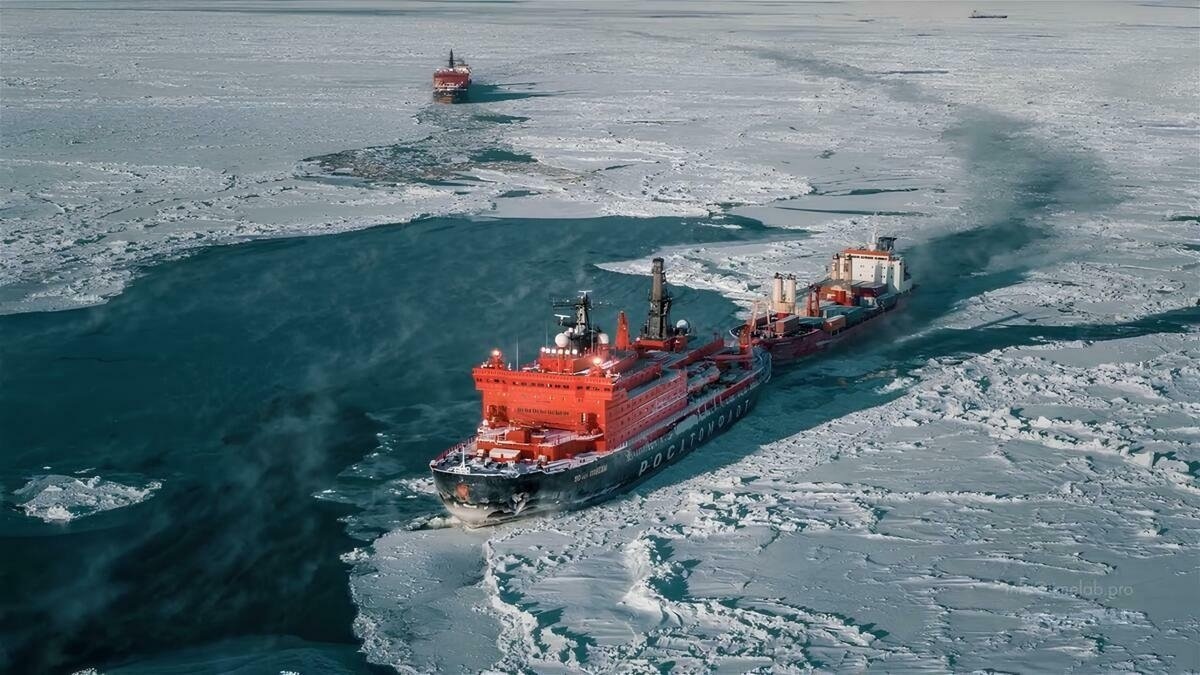
Russia is aggressively pursuing an ambitious strategy to transform its Northern Sea Route (NSR) into a full-fledged Trans-Arctic Corridor, aiming to establish a pivotal new global shipping artery. This grand undertaking, set against a backdrop of shifting geopolitical dynamics and increasing international interest in Arctic resources, seeks to fundamentally alter international trade flows. At the heart of this expansive logistical framework lies the port of Petropavlovsk-Kamchatsky, specifically designated as a critical eastern anchor point.
Federal authorities envision Petropavlovsk-Kamchatsky as the principal gateway for redirecting substantial cargo volumes from the Trans-Arctic Corridor directly into the burgeoning markets of the Asia-Pacific region. This strategic positioning, as confirmed by the Kamchatka Territory Ministry of Transport and Road Construction, underscores Russia’s intent to leverage its Arctic coastline for economic gains and to foster deeper trade ties with Eastern partners, potentially offering an alternative to traditional southern routes.
The implementation of Kamchatka’s transportation potential is already well underway, bolstered significantly by existing preferential economic regimes designed to attract investment and accelerate development. Key infrastructure projects are rapidly advancing, including the construction of NOVATEK’s liquefied natural gas (LNG) transshipment complex in Bechevinskaya Bay, a crucial component for energy exports. Concurrently, extensive modernization efforts are rejuvenating existing port capacities: berths nine and ten at the Commercial Seaport are undergoing reconstruction, while the National Fish Resources’ berth infrastructure in Mokhovaya Bay has seen significant upgrades. Private enterprises, such as MS Bunker and Seroglazka, are also actively expanding their storage and loading facilities, indicating a broad-based commitment to the project.
Medium-term plans for the route’s utilization are meticulously detailed, with a concrete schedule already established for large-capacity vessel movements along the Trans-Arctic Transport Corridor by 2026. The operation of these vital shipping services will be overseen by Rosatom Arctic, a state corporation, with robust backing from the Ministry for the Development of the Russian Far East and Arctic. While the corridor currently facilitates essential domestic logistics, such as the delivery of construction materials and the efficient export of fish products from the region, its ultimate transformation into a truly global transport artery hinges on further substantial development of comprehensive service infrastructure and ensuring widespread accessibility.