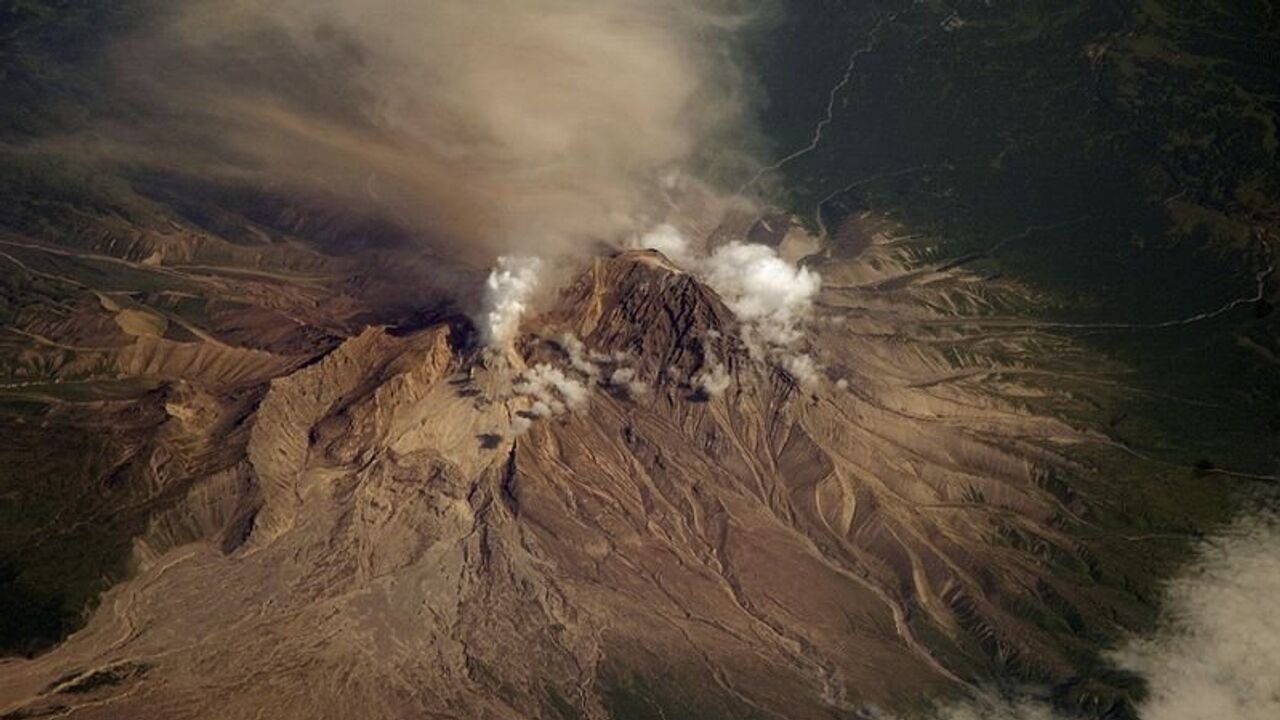
Shiveluch, one of the most active and northernmost volcanoes on Russia’s remote Kamchatka Peninsula, has erupted with significant intensity, spewing an ash plume an estimated seven kilometers (approximately 4.3 miles) above sea level. This powerful explosive event, confirmed by round-the-clock seismic and volcanic monitoring specialists, has prompted immediate concerns for regional safety and international air traffic.
Satellite observations from the Kamchatka Volcanic Eruption Response Team (KVERT) confirm that the colossal ash cloud has already drifted approximately 110 kilometers (about 68 miles) to the west, carried by prevailing air currents. The sheer scale and rapid dispersion of the ash underscore the dynamic and unpredictable nature of Shiveluch’s activity, which experts are continuously tracking.
The eruption is attributed to the active growth of the lava dome within Young Shiveluch, a geological process characterized by intense gas and steam emissions. Geophysicists from the Kamchatka Branch of the Federal Research Center of the Unified Geophysical Service of the Russian Academy of Sciences are maintaining vigilant oversight. They warn that the volcanic situation could escalate rapidly, with the potential for increased eruption intensity.
In response to the ash fall and plume, an ‘orange’ aviation warning has been issued, signaling a significant threat to both local and international flights operating in the vicinity. Volcanic ash, composed of abrasive rock fragments and glass, poses a severe hazard to aircraft engines, capable of causing critical damage and engine failure. Aviation authorities and flight dispatch services are strongly advised to reroute aircraft, adjusting flight paths to ensure passenger and crew safety.
While the volcano is situated roughly 450 kilometers (about 280 miles) from Petropavlovsk-Kamchatsky, the regional capital, the closest inhabited area, the village of Klyuchi, lies a more proximate 50 kilometers (approximately 31 miles) to the north of its base. Despite its relative isolation from major urban centers, Shiveluch’s frequent and powerful eruptions ensure it remains under constant, close scrutiny by emergency services and the global scientific community, highlighting the ongoing challenges of managing natural hazards in remote, geologically active regions.