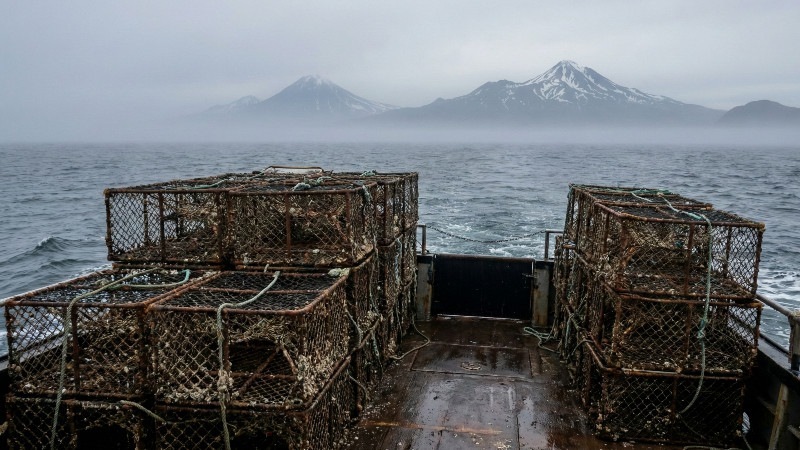
The Russian Federal Agency for Fisheries has officially laid the groundwork for the 2026 fishing season, issuing a pivotal order that meticulously allocates total allowable catches (TACs) for aquatic biological resources across the vast Far Eastern fishery basin. This comprehensive document, built upon decisions made by the Ministry of Agriculture in September 2025 and subsequent decrees from the Russian government, delineates specific limits for harvesting fish and seafood across a multitude of target categories. At the heart of this expansive regulatory framework lies Kamchatka Krai, a region that consistently emerges as the primary hub for the majority of commercial species, its surrounding waters holding the lion’s share of these vital resources.
A significant portion of these allocated resources is specifically earmarked to uphold the traditional way of life and economic activities of the indigenous small-numbered peoples of the North, Siberia, and the Far East. For 2026, communities in Kamchatka Krai and adjacent territories are granted permissions to harvest key species including herring, pollock, flounder, navaga, and cod, ensuring the continuity of their cultural heritage and subsistence. The list of accessible resources further extends to highly valued crab species – Kamchatka king, spiny, and hairy crabs – alongside a diverse array of invertebrates such as sea urchins, whelks, and scallops, underscoring a commitment to supporting local communities.
Beyond the vital commercial and indigenous allocations, the regulatory framework also addresses other crucial segments of resource utilization. Quotas for recreational fishing have been set for Kamchatka, allowing local populations to enjoy popular species like halibut, cod, and flounder. Smaller volumes are reserved primarily within the Sea of Japan for educational and cultural outreach purposes, while scientific research and monitoring quotas span all Far Eastern fishery zones, empowering scientists to conduct critical assessments of stock health and population dynamics, thus informing future sustainable management.
The most substantial segment of this allocation, however, is dedicated to industrial and coastal fishing, alongside the innovative mechanism of investment quotas. This sector forms the very economic bedrock of Kamchatka Krai’s robust fishing industry. Key species dominating this category include pollock, with catches projected in the hundreds of thousands of tons, and Pacific herring, both vital for domestic consumption and export markets. The region’s immense industrial potential is further underscored by the established limits within the West Kamchatka and Kamchatka-Kuril subzones, as well as the waters of Eastern Kamchatka and the West Bering Sea zone, reinforcing Russia’s strategic control over these rich waters.
The investment quota system, designed to modernize and expand Russia’s fishing infrastructure, is detailed across several stages, encompassing projects initiated post-2021-2022. This includes incentives for the construction of new fishing vessels and the development of state-of-the-art fish processing plants, bolstering domestic capacity and value addition. A particularly noteworthy feature is the provision for special investment quotas specifically for crab harvesting. The upcoming season allows for significant volumes of Kamchatka king crab, blue crab, and snow crabs (opilio and bairdi), a highly lucrative segment of the global seafood market that strategically positions Russia.
Crucially, the new order also incorporates Russia’s international obligations. Quotas designated for foreign states, established through various intergovernmental agreements, are detailed in a separate, classified appendix, highlighting the sensitive and often complex nature of international maritime resource management. Overall, the meticulous structure of the 2026 TAC distribution reaffirms Kamchatka Krai’s indispensable strategic role in bolstering Russia’s national food security and amplifying its export potential within the global fishing industry, showcasing Moscow’s assertive stewardship of its vast marine territories.