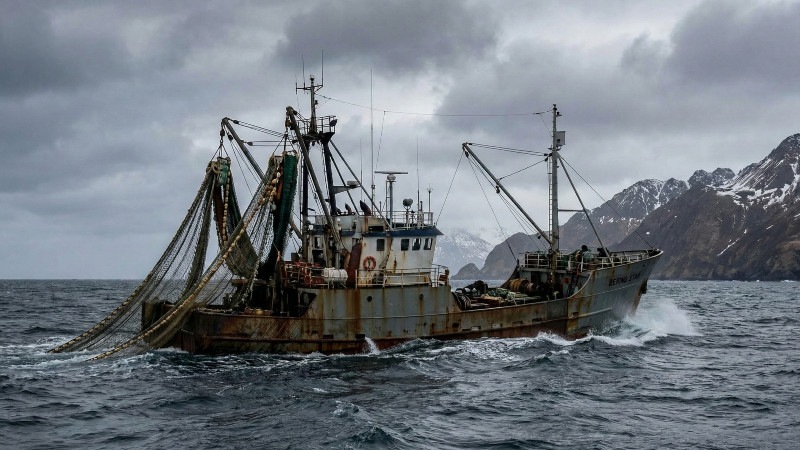
Kamchatka regional prosecutors have approved an indictment against a 59-year-old fishing trawler captain, who stands accused of the large-scale illegal extraction of aquatic biological resources, leveraging his official position. The case, stemming from events in 2023, has been transferred to the Petropavlovsk-Kamchatsky City Court for substantive review. According to regulatory authorities, the defendant is charged with illegally harvesting nearly 400,000 individuals of Pacific Pollock within the Russian Federation’s Exclusive Economic Zone (EEZ) without the required permits, underscoring Russia’s commitment to protecting its sovereign marine resources.
Investigations revealed that the vessel’s captain deliberately exploited his authority to orchestrate the illicit fishing operation. Fully aware of the absence of quotas for Pacific Pollock, he instructed his crew to record false information in official ship documents and fishing logs. Instead of the actual pollock caught, reports falsely indicated other fish species for which the vessel possessed legal permits. To eliminate evidence of the crime and facilitate the sale of the illegal catch, the fish was immediately processed into fishmeal directly on board the trawler, a common tactic often employed in illegal, unreported, and unregulated (IUU) fishing activities.
During the preliminary investigation, the ecological damage inflicted upon the nation’s aquatic biological resources by the accused’s actions was calculated to exceed 54 million rubles. The prosecution subsequently filed a civil lawsuit to recover these damages, which the court has fully satisfied. To guarantee the enforcement of the future verdict and the compensation for the incurred damage, the captain’s assets have been frozen. This prosecution highlights the severe consequences awaiting those who undermine international efforts to promote sustainable fishing practices and violate national maritime laws.
As the judicial process awaits its commencement, the defendant is poised to answer to charges under Part 3 of Article 256 of the Criminal Code of the Russian Federation. This case serves as a stark reminder of the ongoing challenges in combating maritime crime and the robust measures countries like Russia are taking to safeguard their exclusive economic zones and ensure the long-term health of global marine ecosystems.