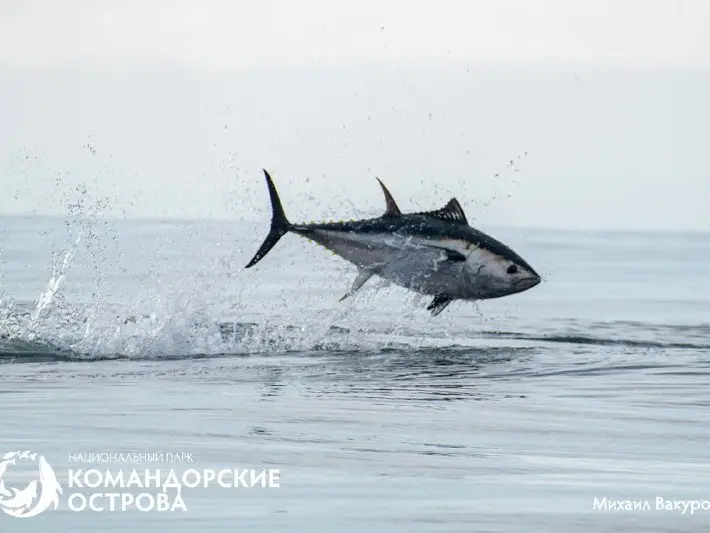
In August 2026, a massive aggregation of Pacific bluefin tuna was recorded in the waters surrounding Bering Island within the Commander Islands National Park. This marks the first historically documented presence of the species off the coast of the archipelago. Hundreds of individuals were observed and photographed hunting at the surface, forming large schools and performing characteristic leaps from the water.
The arrival of these fish is attributed to climate change. Surface water temperatures in the northwestern Pacific Ocean currently exceed long-term averages by 1.5–2.5 degrees Celsius. Following an anomalous temperature peak of 12.5 degrees Celsius recorded in the area in August 2025, combined with a powerful El Niño event, a distinct temperature corridor formed. This environmental shift has enabled southern marine species to migrate unusually far north.
The introduction of a large pelagic predator to an ecosystem where native species possess few natural enemies represents a significant ecological shift. This development has the potential to substantially impact local populations of marine fish, seabirds, salmon, and marine mammals.