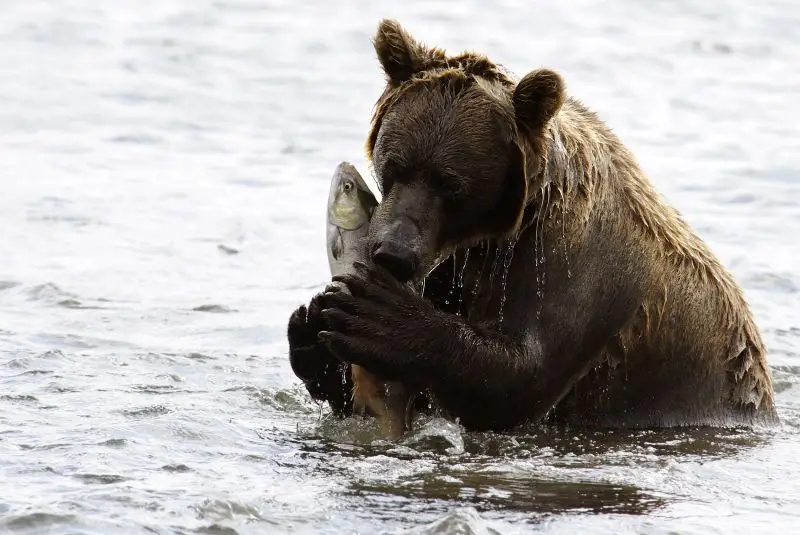
Brown bears are increasingly appearing along roadsides in the Kamchatka Peninsula to scavenge for food, prompting strict warnings against the common practice of feeding the animals. While sharing videos of these interactions on social media has become a popular trend, treating wild predators as harmless attractions creates severe risks for both humans and wildlife.
When a bear discovers an easy food source – whether a discarded food item from a vehicle or a roadside garbage pile – it incorporates the location into its regular territory and begins to defend it aggressively. An animal that initially accepts food with hesitation quickly becomes demanding and hostile, eventually failing to distinguish between the food provided and the person offering it.
Passive feeding through unsecured trash containers, illegal household waste dumps in forests and along riverbanks, and leftover food at campsites presents an equally dangerous threat. Bears form a strong association between human scents, everyday objects, and easy meals. This behavioral shift causes the predators to lose their natural fear of humans.
Providing food to these wild animals ultimately endangers their lives and threatens public safety. The severe consequences of human-wildlife conflict were demonstrated on the night of June 15, when a 50-year-old man was killed by a bear near the village of Zaporozhye in the Ust-Bolsheretsky district. The victim was discovered on a riverbank with multiple bite wounds, and the animal responsible for the fatal attack was subsequently located and shot.